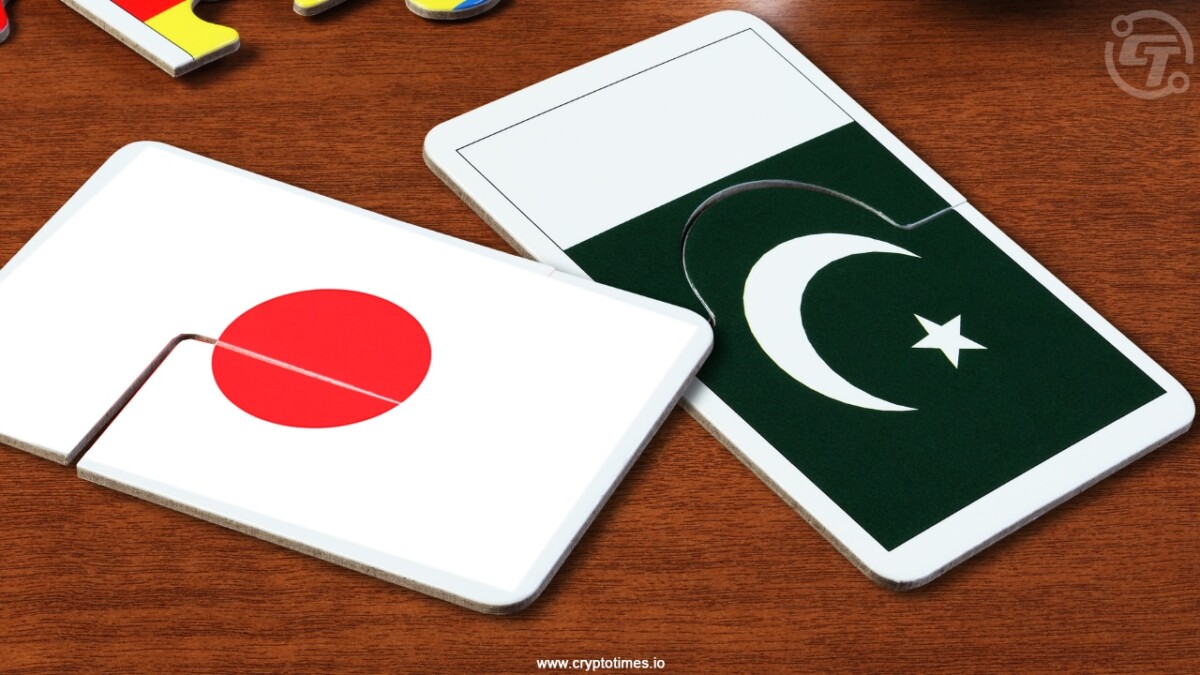
Pakistan has announced plans to begin testing its own digital currency with support from Japan’s blockchain company Soramitsu before the end of 2025. The project aims to modernize payments and make banking services more accessible across the country.
Soramitsu, a Tokyo-based blockchain firm, develops digital payment systems and central bank digital currencies. It helped Cambodia launch the Bakong digital currency and will now assist Pakistan, which has a population of 250 million and a $400 billion economy achieve the same goal.
The project is designed to reduce reliance on cash, which remains common in rural areas where many people do not have bank accounts and wages are often paid in cash as per a report on Nikkei.
“Many transactions in rural areas are cash-based, even for wage payments, and the rate of people with bank accounts remains low,” said Masato Toriya, a Pakistan specialist and associate professor at Tokyo University of Foreign Studies. The digital currency could cut the high costs of handling cash and expand access to financial services.
Pakistan Moves Toward Digital Currency
Funding for the project comes from Japan’s Ministry of Economy, Trade, and Industry under the Global South Future-Oriented Co-Creation Project to fix financial challenges in Pakistan.
Soramitsu is also introducing offline features that allow people to make transactions on smartphones without continuous internet access, a feature that could be particularly useful in areas with poor connectivity.
The State Bank of Pakistan (SBP) is preparing regulations to oversee digital currencies. Governor Jameel Ahmad said the central bank is finalising rules and preparing to launch the pilot soon, while ensuring proper regulation for virtual assets.
Pakistan has also set up the Pakistan Crypto Council to explore cryptocurrency projects, including bitcoin mining using surplus energy. Recently it sealed a partnership with El Salvador to explore how crypto can be used for various solutions in Pakistan.
However, virtual currencies remain unlicensed in Pakistan, but are not banned. And investors have been told to wait for formal rules before participating.
If this project is successful, the digital currency pilot could help Pakistan rely less on cash, lower transaction costs. Additionally, it will make banking services easier to use, and may also serve as a model for other countries in the region looking to adopt central bank digital currencies.
Also Read: US, Allies Dismantle BlackSuit, Grab $1M in Crypto Assets