The Ethereum (ETH) futures trading volume on Chicago Mercantile Exchange (CME) reached a new record of $118 billion in July. This was a staggering increase of 82% from the number recorded in June, showing a surge in investors’ appetite in trading Ethereum futures amid its ongoing remarkable run.
Besides futures trading volume, Ethereum open interest—the total value of active contracts that have not yet been settled—also grew sharply. It rose 75% from $2.97 billion in June to $5.21 billion in July—as per CME data. This shows strong participation and funds moving into the Ethereum futures market.
Most of the investors use Ethereum futures to hedge their spot investments, speculate on quick price changes, and get exposure without owning Ethereum.
The growth at CME is part of a wider increase across all exchanges. Total monthly volume of Ethereum futures across all markets hit $2.12 trillion in July. This was 38% higher than June and set a new record. The previous record was $1.87 trillion in May 2021. Moreover, open interest for Ethereum across all exchanges stood near record levels at about $36.3 billion in early August.
ETH Price Eying to Break All-time High
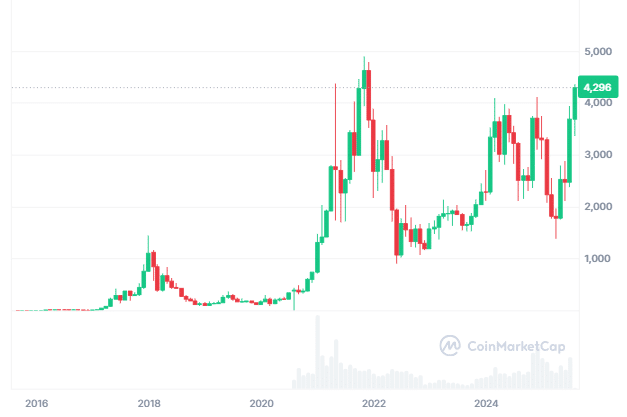
The price of Ethereum (ETH) rose with the futures activity. Currently trading near $4,300, ETH has surged over 17% in the past seven days. It is roughly 13% away from breaking to a new all-time high. However, funding rates for Ethereum futures are still below the levels seen at the end of 2024, which shows some traders remain cautious.
Ethereum’s role in decentralized finance (DeFi) and smart-contracts sector is pushing demand for futures. Besides, the increasing adoption of ETH for strategic reserves is also playing a key role in pushing ETH price higher.
The record volume and open interest show Ethereum is gaining wider acceptance in traditional finance. More institutions are using regulated crypto products like CME futures. This helps connect digital assets with mainstream finance.
The rise in CME Ethereum futures shows growing trust in Ethereum as a financial asset but by individual consumers and institutions. Futures offer a way to trade and manage risk under regulation. This may encourage more adoption and help the market become more stable.