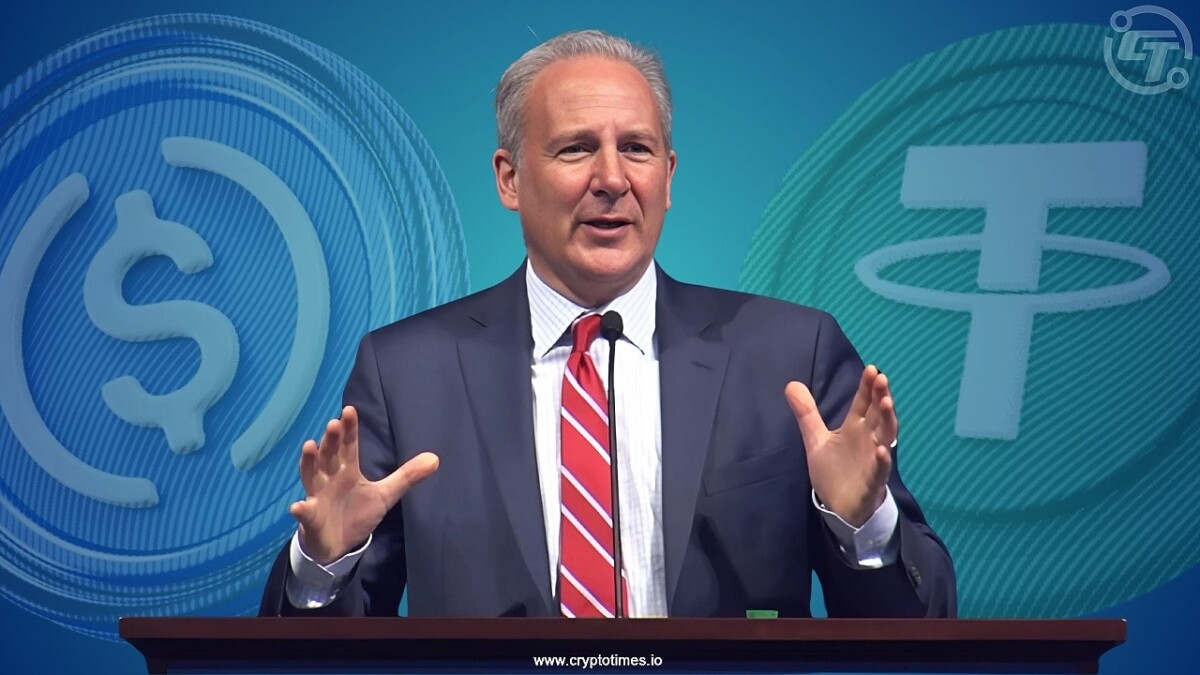
Peter Schiff, a prominent economist and stockbroker, contested the conventional view that stablecoins boost demand for U.S. Treasuries, asserting instead that they divert existing capital and could contribute to higher long-term yields.
In a series of posts on his X account, Schiff explained that the increasing adoption of stablecoins may crowd out traditional lending and potentially increase mortgage rates. He argued that when investors transfer funds from conventional money market accounts into stablecoins, the underlying capital doesn’t represent new money entering the Treasury ecosystem. Instead, it’s merely redirected.
He further clarified that a stablecoin issuer’s purchases of Treasury securities are funds that money market accounts would have acquired anyway. The crucial difference, according to Schiff, is that stablecoin holders effectively forfeit the interest on those treasuries to the issuing firms, rather than receiving it directly as they would with traditional money market investments.
Impact on Long-Term Yields and Borrowing Costs
In his post, Schiff emphasized that stablecoin issuers are typically restricted to buying short-term Treasury instruments. This, he warned, could lead to a decrease in demand for long-term bonds, critical in determining mortgage rates. A decline in this demand, he suggested, would push long-term yields higher, thereby increasing borrowing costs for homeowners and businesses alike.
Schiff outlined the macroeconomic implications of investments poured into stablecoins. He stated, “Money that goes into stablecoins to buy short-term Treasuries can’t be loaned out to private borrowers, crowding out capital investment.” This raises concerns about reduced capital availability for productive investment in the private sector.
Skepticism Amidst Growing Adoption
The skepticism raised by Schiff emerges from the growing adoption of stablecoins worldwide, particularly among institutions and fintech firms that need an efficient exposure to the USD. While advocates highlight benefits such as liquidity and transparency, critics like Schiff are concerned about potential instability in the traditional financial markets and private capital allocation.
This debate reiterates the questions about how crypto innovations interact with established systems and if current regulatory frameworks are adequate for the rapid stablecoin growth.
Also Read: Hong Kong’s RD Technologies Raises $40M Amid Stablecoin Licensing Buzz