Key Highlights
- Hoskinson said Amazon, Google, and Facebook are “terrified” because AI agents could disrupt ad, search, and consumer-platform models.
- He argued AI agents may become one of crypto’s biggest adoption drivers by handling DeFi diligence and wallet complexity.
- The speech positioned Midnight Passport as a privacy and identity layer for both humans and autonomous agents.
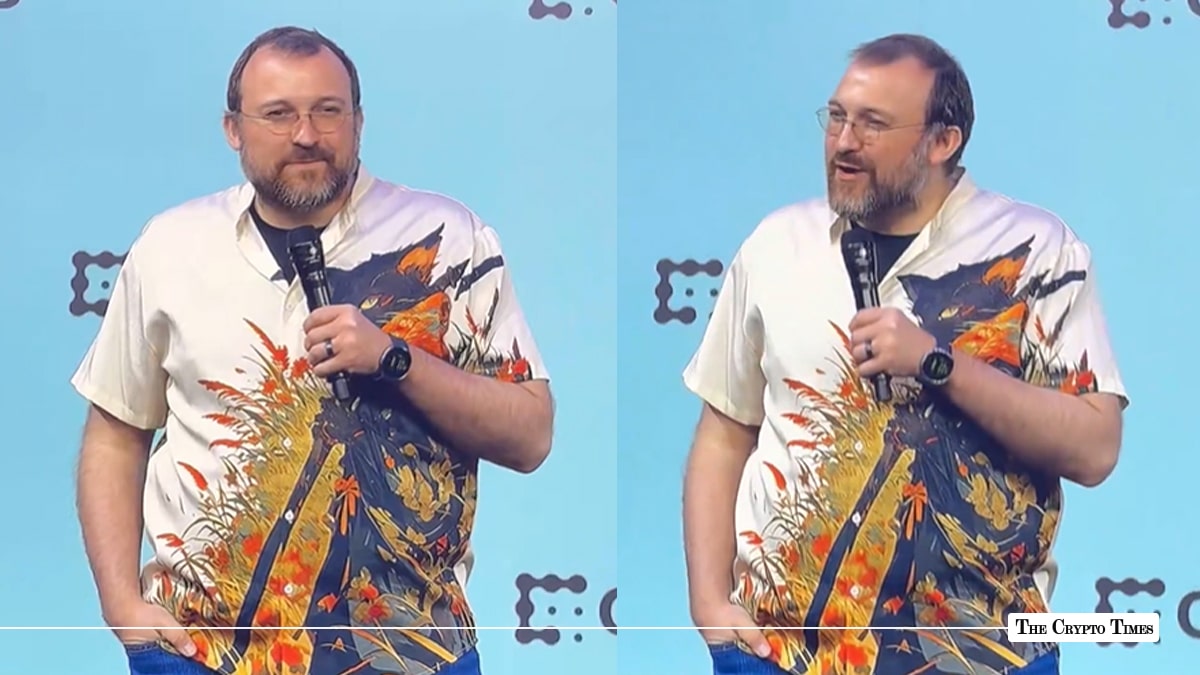
Cardano founder Charles Hoskinson said Amazon, Google and Facebook are “terrified” of the coming agentic AI revolution, arguing that autonomous agents could break the internet model that made Big Tech dominant.
Speaking during a Miami-stage address, Hoskinson said the current web could split into a “human Internet,” where people remain in a smaller corner of online activity, while “all the real stuff” moves to a global internet run by AI agents.
His sharpest warning targeted the advertising and consumer-discovery models behind the largest internet platforms.
“Does an agent click a Google ad?” Hoskinson asked. “Does an agent have a preference for the Google search engine over the Bing search engine?”
His answer was direct: no. Agents, he argued, will not behave like human consumers. They will not browse, click, compare brands, or follow platform-driven discovery in the same way. That shift, he said, explains why companies such as Amazon, Google, and Facebook are pouring capital into AI even as the technology threatens their existing businesses.
What’s in it for crypto bros
Hoskinson said the rise of AI agents could be “the single best thing ever to happen to cryptocurrencies” because agents solve the other side of crypto’s simplicity problem.
On one side, he said, is wallet access: users owning their keys, controlling their assets, and using crypto from a phone without friction. But that does not solve the harder problem of using DeFi safely.
He argued that average users cannot realistically read whitepapers, check founding teams, examine smart-contract risk, verify counterparties, and understand DeFi protocols before every transaction. In that world, he said, AI systems such as ChatGPT and Gemini become the diligence layer for crypto users.
“So you have to connect the crypto to the AI,” Hoskinson said. “They have to be connected in some way.”
That framing fits a broader industry shift around agentic payments. x402 describes itself as an open standard for internet-native payments that can power agentic payments at scale, while Google’s Agent Payments Protocol is designed to help agents securely authenticate, validate, and convey a user’s authority to transact.
Wallets, identity, and agent economy
Hoskinson also pointed to the Open Wallet Standard as part of the missing infrastructure for AI agents. MoonPay launched the standard in March 2026 as an open-source framework that gives AI agents a way to hold value, sign transactions, and pay for services across major blockchains without exposing private keys.
He said agents need identity, wallets, and agency before they can operate safely in crypto. Without those layers, agentic trading and DeFi automation could create new risks around custody, authorization, and user consent.
The speech also tied this trend to Midnight, the privacy-focused blockchain project linked to the Cardano ecosystem. Hoskinson said Midnight Passport is not only about passports for people, but also about “passports for agents,” allowing rules to be placed around what data an agent can use, where that data can go, and who can access it.
Midnight’s own materials describe the network as using zero-knowledge proofs and selective disclosure to protect sensitive data while allowing developers to decide what information is revealed when required.
Privacy becomes core problem
Hoskinson said AI agents become more useful as they know more about users, but that creates a major privacy problem.
“For an agent to be effective, an agent has to know you,” he said. “The more the agent knows about you, the more problematic that is.”
He used medical data as an example, arguing that privacy-preserving systems could allow researchers or drug companies to query useful information, such as how many people have a condition, without exposing names, addresses, or identities. Users could then choose whether to consent to further contact.
That is where Hoskinson positioned Midnight: not just as a privacy chain, but as a rule-based data and identity system for humans, institutions, and AI agents.
Bigger picture
Hoskinson argues that the next internet will not be built around humans manually searching, clicking ads, and opening apps. It will be built around agents acting on behalf of users.
For Big Tech, that threatens the existing attention economy. For crypto, it creates a new opening: agents need wallets, payments, identity, authorization, privacy, and rules.
That is why the agentic AI trend is quickly becoming a crypto infrastructure fight. x402 handles machine-native payments, Google’s AP2 targets agent-commerce authorization, Open Wallet Standard focuses on agent wallet access, and Midnight is positioning itself around private identity and rule-based data controls.
Hoskinson closed the speech by saying his end goal is a system where users have self-custody, own their identity, control their wallets, and retain privacy.
“Once they have that,” he said, “then I don’t care who wins. Because then we all won.”
Also Read: Bitcoin Core Reveals Vulnerability That Could Crash Nodes Remotely