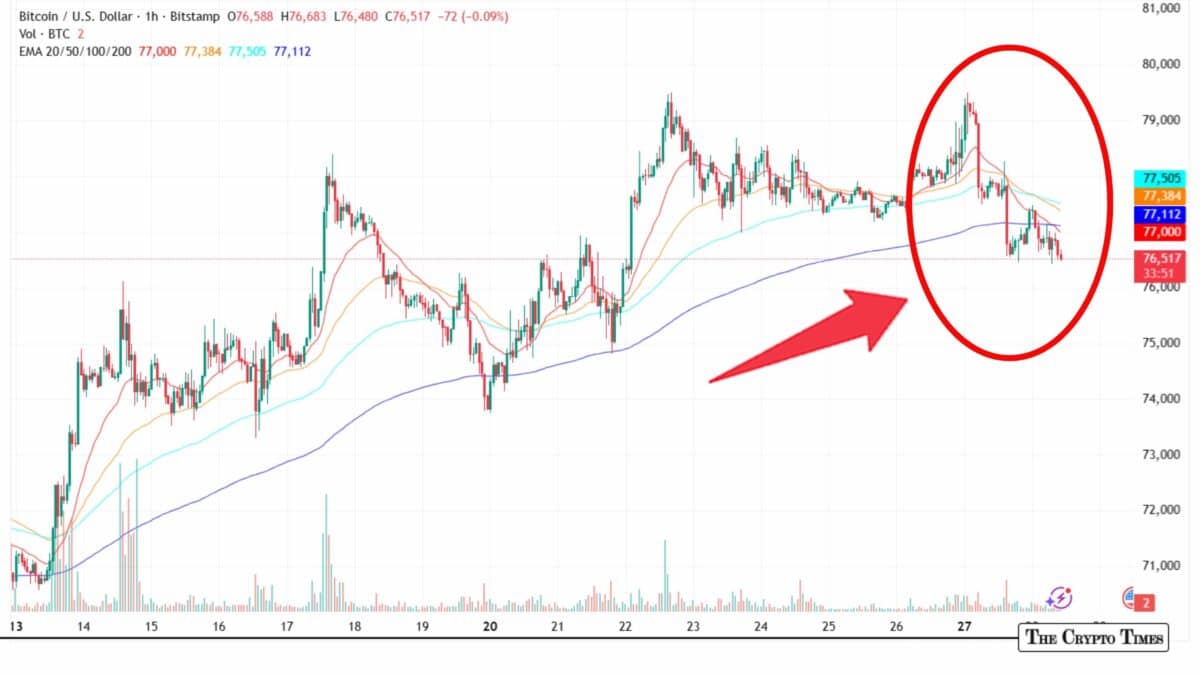
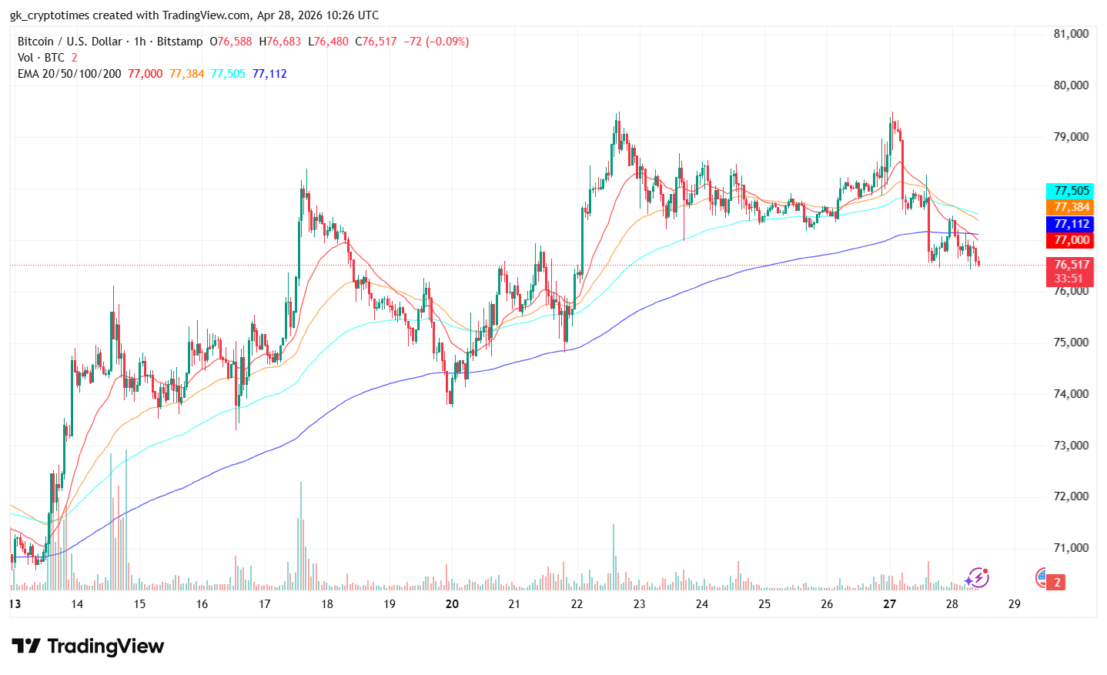
Bitcoin suffered a sharp, sudden drop during weekly open in the U.S. and worldwide, shedding roughly $3,000 in a matter of hours as leveraged long positions unraveled in the derivatives market.
The cryptocurrency slid from the weekly high of $79,266 in the early morning to below $76,500, triggering over $100 million in long liquidations within roughly one hour, according to on-chain analytics firm CryptoQuant.
Unlike previous sell-offs fueled by heavy spot selling from ETFs or long-term holders, this move appeared driven almost entirely by structural factors in the futures and perpetuals market.
Thin weekend liquidity amplified the cascade: with fewer institutional players active, relatively modest sell orders punched through key levels, breaching margin thresholds and forcing automated liquidations that fed on themselves.
“This dynamic is more pronounced in low-liquidity conditions, where even relatively small capital can move price significantly,” notes XWIN Japan—a Tokyo-based crypto trading firm.
As of publishing, Bitcoin is trading around $76,500—showing tentative signs of recovery but remaining trapped in a volatile consolidation.
Rebuilding open interest after liquidations
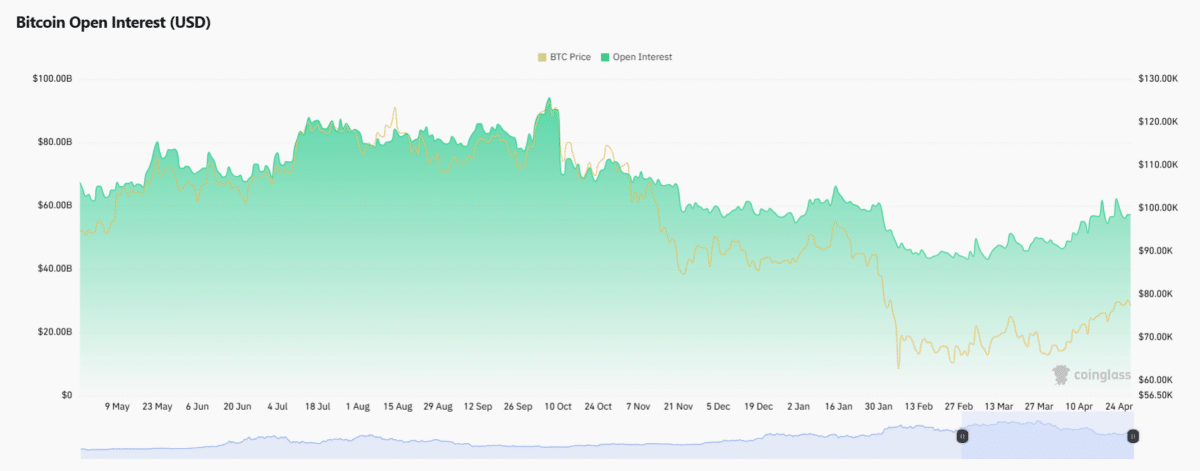
Bitcoin’s open interest had been elevated heading into the move, leaving the market vulnerable to exactly this kind of violent reset. As of Tuesday morning, Bitcoin was trading around $76,500–$77,000, showing tentative signs of stabilization but remaining inside a volatile range.
Total open interest across Bitcoin futures has since rebuilt toward $25 billion, signaling that traders are already reloading leverage—a reminder that the setup for another swing remains intact.
Data from Coinglass shows the liquidation wave was heavily concentrated in Binance and Bybit perpetuals, where long-heavy positioning amplified the move. Funding rates, which had turned positive in the days prior, flipped sharply as the cascade unfolded, reflecting the rapid unwinding of bullish bets.
This event mirrors patterns seen earlier in April, where leverage rebuilt quickly after flushes but spot participation lagged, leading to repeated short-term swings. Market participants are increasingly using liquidation heatmaps to position defensively around known clusters
The episode underscores a broader theme in crypto’s maturing but still derivatives-heavy market. Spot demand has shown contraction in recent weeks, yet institutional accumulation via ETFs continues in the background.
That divergence means short-term price action is increasingly dictated by futures positioning rather than underlying conviction.
Analysts at XWIN Japan emphasized that no major on-chain distribution from whales or ETF outflows appeared to drive the drop. Instead, it was a textbook case of “structural downside”—a reminder that in leveraged markets, price can detach rapidly from fundamentals before snapping back once weak hands are cleared.
Also read: OFAC Updates Iran Sanctions as $344M in Tether Frozen Amid Hormuz Tensions