Key Highlights
- Curve’s Michael Egorov proposes turning bad debt into tradable assets, shifting losses from bailouts to open market participants.
- The model ties returns to CRV price, offering limited downside while allowing investors to recover value if the token rebounds.
- Mixed reactions emerge as DeFi players weigh market fixes against bailouts after KelpDAO fallout.
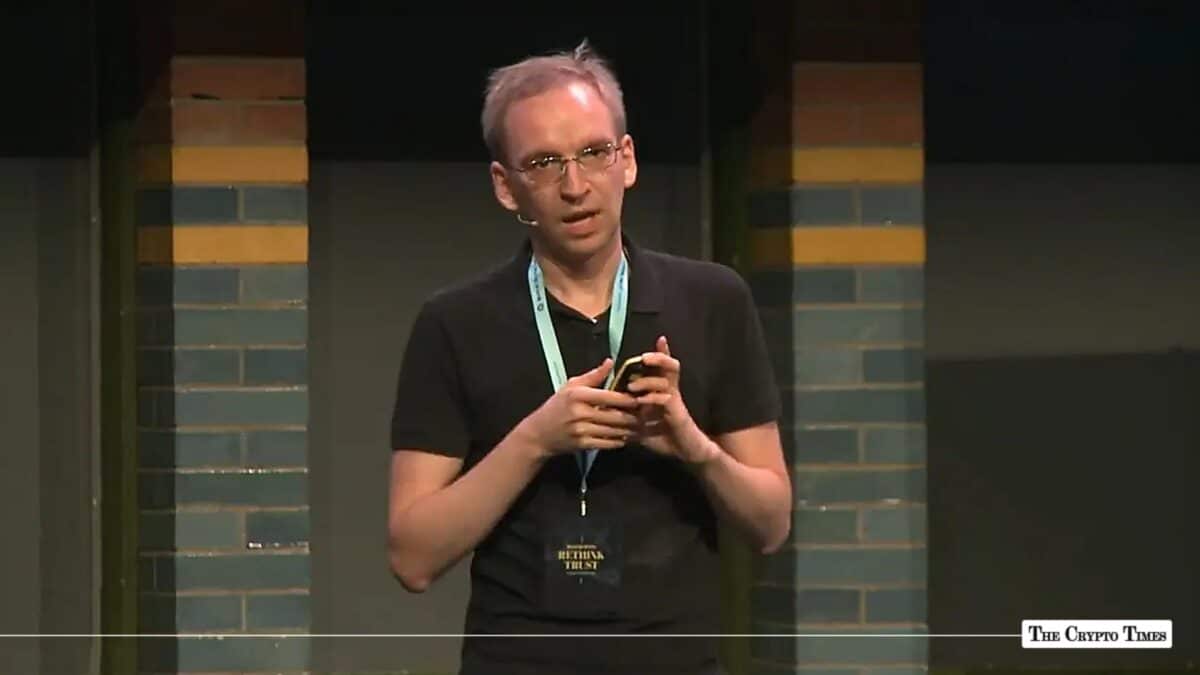
Curve Finance Founder Michael Egorov has put forward a new way to deal with bad debt following recent disruptions in decentralized finance (DeFi). In a proposal released April 26, he addressed losses tied to Curve’s CRV-long LlamaLend market, where a roughly $700,000 shortfall emerged after liquidations in October 2025.
As per the proposal, instead of relying on community bailouts or closed-door deals, Egorov’s plan shifts the burden to the open market. The idea is to turn troubled positions into assets that can be traded. This allows outside participants to step in and take on the risk, rather than leaving the losses unresolved.
Under the plan, users would be able to swap the affected vault tokens through a dedicated pool using crvUSD and LP tokens. The setup links returns to movements in the CRV price, meaning outcomes depend on how the token performs over time.
Turning bad debt into “option-like” assets
The LlamaLend shortfall emerged following extreme volatility in October 2025, leaving the vault tokens (which represent lender positions) backed at only 70.5% of their original value.
Under Egorov’s plan, the vault tokens tied to these positions already reflect the losses and could be treated as tradable assets. A dedicated Curve stableswap pool—characterized by low amplification (A=2) and a high exchange fee (1%) — would be created to concentrate liquidity around the current solvency level.
The structure depends largely on how CRV performs. If the token’s price rises, the level of backing improves and the gap narrows. If it falls, losses do not significantly deepen. This creates a one-sided risk profile, where downside is limited but some upside remains.
Egorov said those traders could use tools such as flash loans to take advantage of price differences, helping to chip away at the bad debt over time. The idea is to let market activity, rather than coordinated action, gradually resolve the imbalance.
Market viability and skepticism
Community reactions have been cautious. One member claimed, “It’s clear no one is going to be buying these positions.” But there were also references to the yield opportunity in case CRV rebounds past certain price points. Another individual raised issues with capital efficiency relative to other derivative instruments.
On its part, this proposal comes amid a wider wave of DeFi woes. Issues with KelpDAO following the $292M bridge exploit on April 18, 2026 have led to discussions around bad debts. This has meant that projects are now evaluating whether they should find market-based or collective solutions for dealing with bad debt problems. Lido and Mantle have also offered assistance, among others. Most recently, the Babylon Foundation contributed $3 million to Aave.
“I proposed a recovery mechanism of bad debt which is not a donation but an investment vehicle for everyone who participates,” Egorov stated in the proposal. If the pilot on Curve’s LlamaLend is successful, it could serve as a global blueprint for decentralized protocols to resolve insolvency without draining DAO treasuries.
Also Read: Justin Sun’s TRON and HTX Inject $20M to Aave’s DeFi United Initiative