Key Highlights
- LiteLLM breach exposed 300GB of data and 500K credentials, showing even popular packages can be risky.
- Malware stole SSH keys, cloud accounts, wallets, and database passwords, spreading via Python and Kubernetes.
- Developers must remove affected versions, rotate credentials, and check for hidden backdoors immediately.
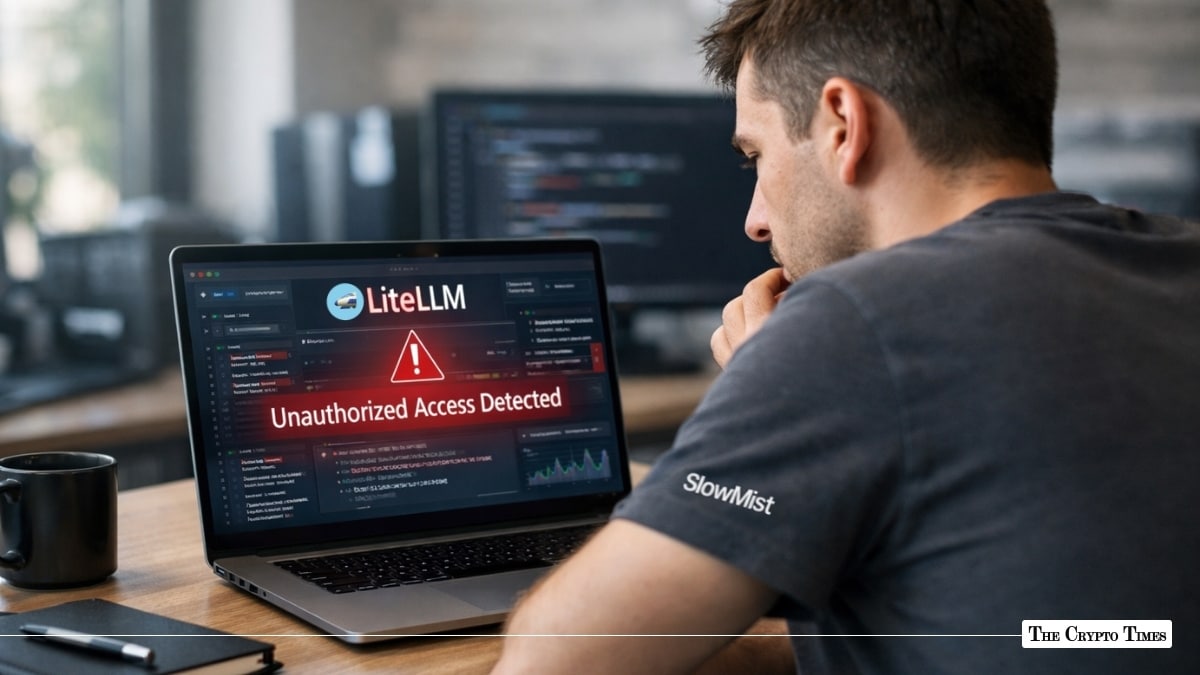
A serious security breach in LiteLLM has put about 300GB of data and 500,000 user credentials at risk. The problem started when hackers slipped malicious code into PyPI releases 1.82.7 and 1.82.8, allowing anyone who installed them to have sensitive information stolen automatically.
SlowMist Technology’s Chief Information Security Officer, 23pds, warned cryptocurrency developers to act fast. He posted, “Please immediately verify, rotate relevant keys and credentials as soon as possible, check logs, access records, and any exposure of sensitive data to avoid severe losses similar to the Trust Wallet incident.”
The attack hit a wide range of sensitive data, including SSH keys, cloud accounts on AWS, GCP, and Azure, Kubernetes setups, Git credentials, environment files, shell histories, encrypted wallets, and database passwords.
Developer Callum McMahon of FutureSearch discovered the malicious release and reported it to PyPI, while Daniel Hnyk subsequently raised a GitHub issue, bringing it to wider developer attention. The malware could also copy itself, spreading through Kubernetes clusters and leaving behind secret backdoors to maintain access.
How the malware operates
The malware carried out its attack in three main steps. First, it collected sensitive files from the infected computer. Next, it encrypted the stolen data and sent it to a remote server at https://models.litellm.cloud/. Finally, it tried to move laterally within Kubernetes environments, creating new pods that gave it full access to systems. On top of that, a bug in the malware caused a fork bomb, crashing affected machines and revealing the attack.
Commenting on X, Andrej Karpathy highlighted the danger, saying, “Every time you install any dependency you could be pulling in a poisoned package anywhere deep inside its entire dependency tree…The credentials that do get stolen in each attack can then be used to take over more accounts and compromise more packages.”
Immediate steps for developers
Developers need to check if they installed LiteLLM versions 1.82.7 or 1.82.8. If so, they should remove the affected packages, clear any cached files, and look for hidden backdoors like ~/.config/sysmon/sysmon.py.
All credentials that might have been exposed should be changed immediately. While PyPI has quarantined the malicious package and maintainers are addressing the issue, this attack highlights just how risky supply chain attacks can be in open-source software.
The LiteLLM breach shows that even widely used software packages can carry serious risks. It highlights the need for developers to carefully manage dependencies and stay alert to potential threats.
Also Read: Dark Web, Tor, Crypto Wallets: Indian Police Begins New Cyber Training