Key Highlights
- RBA Assistant Governor Brad Jones said the central bank “no longer see[s] the main question as whether tokenization has a future in Australia’s financial system.”
- Jones identified three systemic barriers that have stymied innovation in Australia’s wholesale markets.
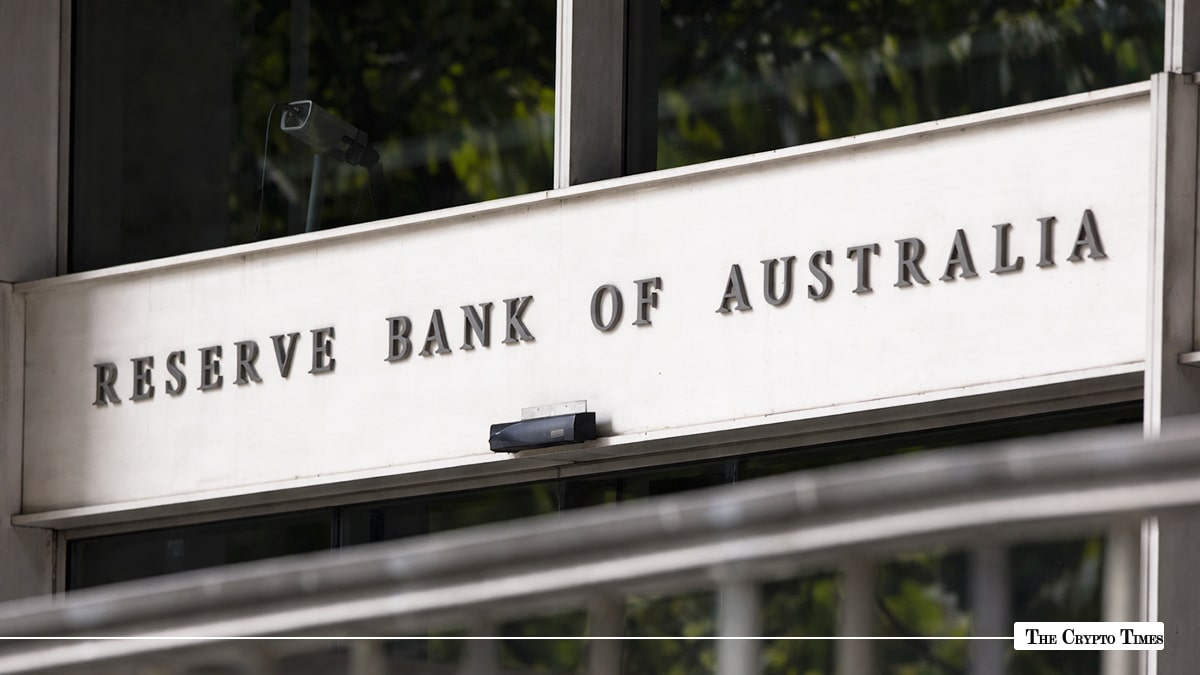
The Reserve Bank of Australia has declared that the question of whether tokenization has a future in the country’s financial system is settled—and the answer is yes.
In a speech delivered on March 25 titled “After Acacia: The Next Era of Financial System Innovation?”, RBA Assistant Governor Brad Jones announced that the central bank is shifting from exploration to implementation planning, following findings from Project Acacia that demonstrated the potential for tokenized money and assets to “reduce risk while unlocking greater efficiency and functionality” in Australia’s wholesale markets.
“We no longer see the main question as whether tokenisation has a future in Australia’s financial system, but rather, how,” Jones said. “We have now seen enough to warrant intensified focus on how some of the potential benefits might be realised, consistent with system-wide stability.”
$24 billion in annual gains
The headline figure anchoring the RBA’s shift comes from research published by the Digital Finance Cooperative Research Centre (DFCRC), which quantified potential gains for the Australian economy “in the order of $24 billion per annum, and larger still if new markets emerged and second round effects are included.”
That figure builds on earlier RBA estimates from 2023 that projected $1–4 billion in annual transaction cost savings from tighter bid-ask spreads, atomic settlement, lower collateral requirements, and reduced costs from failed settlements. The updated DFCRC analysis incorporates broader economic effects, including the potential for tokenization to create entirely new markets that don’t currently exist at scale.
Jones acknowledged that tokenization “gives rise to a number of issues that should be subjected to closer scrutiny,” but argued the evidence base has crossed a threshold that demands more active engagement rather than continued caution.
Project Acacia: From pilot to policy signal
Project Acacia, the joint RBA-DFCRC initiative launched in November 2024, tested 24 use cases involving real money and real asset transactions across a diverse range of participants—from local fintechs to three of Australia’s four major banks (CBA, ANZ, and Westpac). Settlement assets tested included stablecoins, bank deposit tokens, and a pilot wholesale CBDC issued on third-party blockchain platforms, including Hedera, Redbelly Network, R3 Corda, and EVM-compatible networks.
The project built on the RBA’s 2023 CBDC pilot, which explored tokenizing carbon credits, debt securities, and supplier invoices using a digital Australian dollar. ASIC provided regulatory relief to enable testing, and the initiative was highlighted in the Australian Treasury’s March 2025 Statement on Developing an Innovative Australian Digital Asset Industry.
Jones noted that fixed-income markets showed the strongest industry interest—a pattern consistent with what the RBA has observed internationally, where tokenized money market funds and repo have led the adoption curve, particularly in the United States.
Three barriers that have held Australia back
Perhaps the most significant portion of the speech addressed why Australia’s wholesale markets have lagged despite the country’s strong digital infrastructure and fintech ecosystem. Jones identified three systemic barriers: “a lack of competitive tension reflecting entrenched network effects; risk aversion, partly reflecting perceived legal and regulatory uncertainty; and coordination failures that have made strategic planning difficult.”
The diagnosis is notable for its directness from a central bank official. Jones effectively acknowledged that the current market structure — dominated by incumbent intermediaries and legacy settlement infrastructure — has created inertia that individual firms cannot overcome on their own, regardless of how compelling the technology may be.
He argued that “unlocking a new spirit of innovation in our wholesale markets is beyond the scope of any individual institution, public or private,” and called for a coordinated approach to “unleash more dynamism in Australia’s financial economy, enhancing our attractiveness as a destination for capital in the digitalising global economy, and strengthening our sovereign resilience.”
Australia risks falling behind
Jones framed the urgency in competitive terms, noting significant global momentum building in tokenized finance. He referenced Clearstream’s launch of a tokenized securities platform, Nasdaq’s equity token design for issuers, and Broadridge’s distributed ledger repo platform achieving 457% year-over-year growth in February 2026 as evidence that major international venues are moving rapidly.
The competitive context is acute. Just last week, the SEC approved Nasdaq’s plan to settle Russell 1000 stocks as tokenized securities, and the NYSE signed an MOU with Securitize naming it the first digital transfer agent for its upcoming 24/7 Digital Trading Platform. Singapore’s MAS is running the BLOOM initiative for tokenized settlement assets.
If Australia’s wholesale markets remain anchored to legacy infrastructure while competitors modernize, the country risks losing capital flows and financial services activity to more innovative jurisdictions.
The RBA’s action items
Jones signaled that the RBA’s work will now shift from research to active policy development. The speech referenced the need for regulatory sandbox improvements, citing the Australian Treasury’s independent review of the Enhanced Regulatory Sandbox, and pointed to the broader digital asset reforms currently underway in Canberra.
The RBA’s Payments System Board and Council of Financial Regulators have engaged closely with Project Acacia, recognizing that “dynamism in our wholesale financial markets has significantly lagged that in other areas of the Australian financial system like retail payments.”
For the crypto and digital asset industry, the speech represents one of the clearest signals yet from a G20 central bank that tokenization of traditional financial markets is moving from experimentation to strategic planning. The RBA is not endorsing any specific blockchain or protocol, but it is saying, publicly and unequivocally, that the era of asking “whether” is over.
Also Read: Australia’s Hostplus Considers Bitcoin and Crypto Access for 2M Members