Key Highlights
- SEC Chair Paul Atkins said enforcement-first regulation pushed crypto innovation outside the U.S.
- He argued that outdated SEC rules left firms facing subpoenas instead of clear compliance pathways.
- Atkins proposed an “ACT” strategy focused on updating rules, clarifying oversight, and removing impractical requirements.
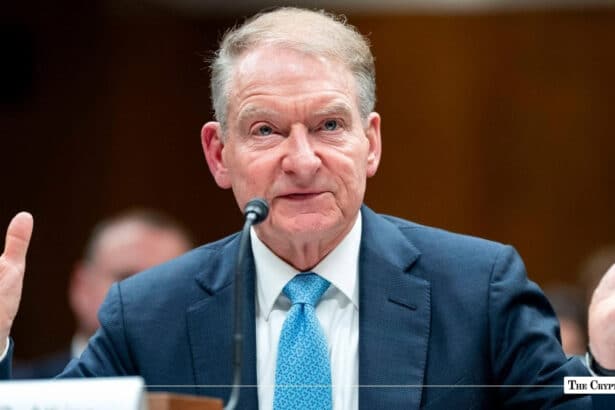
U.S. Securities and Exchange Commission (SEC) Chairman Paul Atkins said the agency’s past reliance on regulation by enforcement helped drive digital asset innovation out of the United States, arguing that firms often faced subpoenas instead of workable compliance pathways.
In remarks outlining his broader regulatory agenda, Atkins said the SEC too often failed to modernize its framework while markets evolved. He argued that the combination of outdated rules and aggressive enforcement discouraged product development and pushed entrepreneurs to build in other jurisdictions.
“When innovators cannot discern fit-for-purpose rules or when they face the prospect of a subpoena as the response to good faith efforts to comply, the rational response is to build elsewhere,” Atkins said.
“An entire generation” developed outside the U.S.
Atkins said the result was not a lack of demand or talent in the U.S., but a failure by regulators to provide a usable framework. According to him, “an entire generation of digital asset innovation” developed offshore because American regulators did not offer clear rules for companies trying to operate domestically. He framed that outcome as a policy failure rather than a market inevitability.
The comments add to a growing effort by current U.S. officials to distance themselves from the SEC’s earlier posture toward crypto, especially the use of enforcement actions in areas where industry participants said formal guidance was missing.
Broader critique goes beyond crypto
Although crypto was one of Atkins’ clearest examples, his criticism extended to the SEC’s rulebook more broadly. He said parts of the regulatory structure no longer match how modern markets function, pointing to requirements that still default to paper delivery for shareholder communications despite the rise of algorithmic trading and artificial intelligence.
He also argued that years of accumulated rulemaking created a compliance system so complex that companies increasingly rely on specialists just to interpret disclosure obligations and procedural requirements. In Atkins’ view, this has shifted the burden of the SEC’s framework away from preventing fraud and toward navigating bureaucracy.
New agenda built around “ACT” strategy
Atkins used the speech to present what he called the SEC’s “ACT” strategy, a framework that groups the agency’s upcoming work into three categories: advancing rules to reflect current market structure, clarifying the regulatory regime to streamline oversight, and transforming requirements by removing what he described as burdensome or impractical obligations.
He said future SEC initiatives, rule proposals, interpretations, and institutional reforms would largely fall under those three pillars.
What it means
Atkins’ remarks suggest that the current SEC leadership wants to recast the agency as more open to rule updates and clearer boundary-setting, particularly in sectors such as digital assets where regulatory uncertainty has had outsized consequences.
For crypto firms, Atkins’ message was that the U.S. lost ground when regulators failed to write workable rules and relied instead on enforcement to define the perimeter. His proposed fix is not less oversight, but a system where companies can understand the rules before they are accused of breaking them.
Also Read: CFTC Details How FCMs Can Handle Crypto, Stablecoins as Collateral