Key Highlights
- Ethereum average transaction currently costs ~0.196 Gwei (lows to 0.055 Gwei); ERC-20 transfers cost $0.01–$0.02, Uniswap swaps ~$0.14, most actions under $0.12 — over 90% cheaper than a year ago.
- Everyday activity shifted to Arbitrum, Base, Optimism. Dencun (2024) and Fusaka (2025) upgrades slashed data costs, turning Ethereum L1 into a secure settlement layer with ~46% block usage.
- Near-zero fees enable easy dApp testing, NFT minting, and small transfers. Glamsterdam upgrade (H1 2026) will raise gas limit to 200M, add parallel processing, and target ~78% further fee reduction — while ETH price stays soft around $2,075.
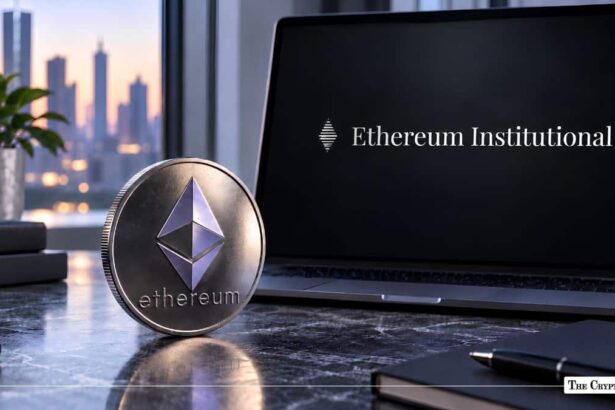
Ethereum gas fees have sunk to some of the lowest levels in the network’s modern history, with on-chain actions now costing pennies, making March 2026, one of the cheapest times ever to use the mainnet.
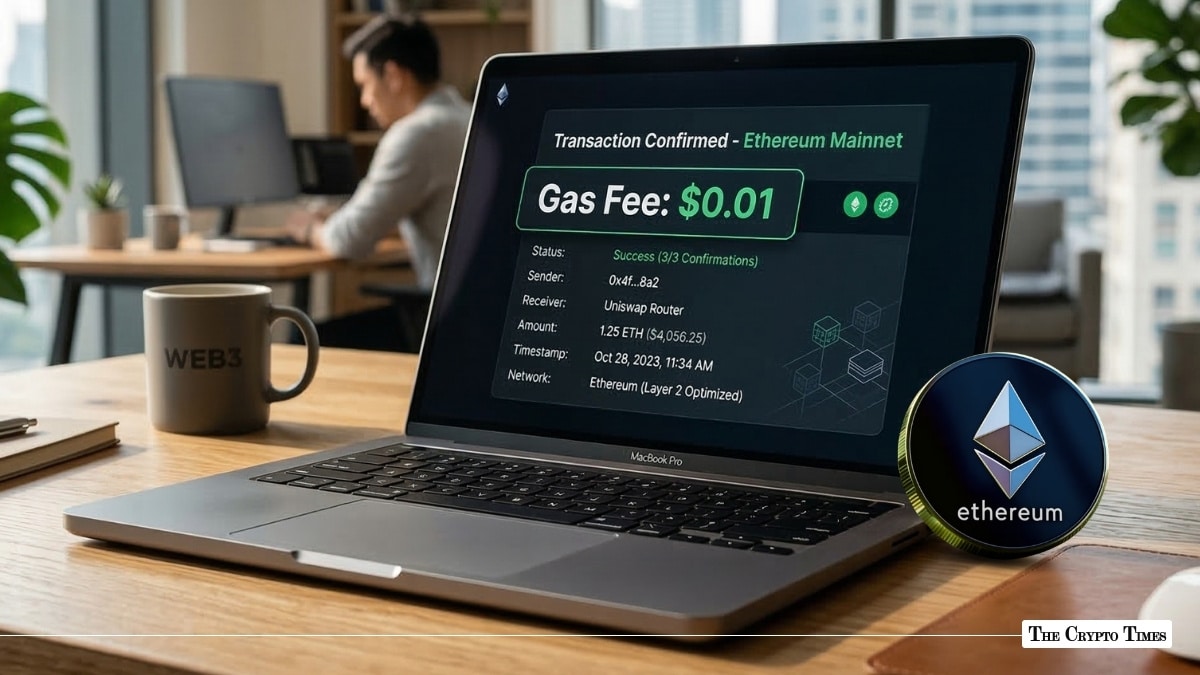
As of March 12 UTC, Etherscan’s gas tracker showed average prices around 0.196 Gwei, with lows dipping to 0.055 Gwei earlier in the day. That translates to real-world costs: a basic ERC-20 transfer runs about $0.01–$0.02, a Uniswap swap hovers near $0.14, and even more complex moves like bridging or borrowing stay under $0.12 in most cases.
Daily averages over the past week have fluctuated between roughly 0.5–0.6 Gwei, a steep plunge from last year’s levels around 6 Gwei—a drop of more than 90% year-over-year.

Thanks to recent developments on Ethereum
The shift is driven after everyday activity to Layer 2 networks like Arbitrum, Base, and Optimism. Upgrades such as the 2024 Dencun (with proto-danksharding via EIP-4844) and late-2025’s Fusaka (expanding blob capacity through PeerDAS) slashed the cost of posting data to the mainnet, letting rollups handle high-volume trades, stablecoin transfers, and DeFi interactions for fractions of a cent.
Ethereum’s Layer 1 has effectively become a secure settlement layer rather than the go-to spot for routine use, keeping block utilization moderate, around 46% on recent days, and preventing congestion.
This quiet mainnet has delivered benefits. Users face almost no barrier to experimenting with dApps, minting NFTs, or moving small amounts of value, and developers report smoother testing and deployment.
Yet the low fees highlight a broader tension. While the ecosystem shows robust underlying health, ETH price lingers around $2,075—well off 2025 highs, with ETF outflows and macro headwinds adding pressure. The metrics also comes amid record transaction counts in recent months, attributing to increasing activity on L2s, dominant stablecoin settlement, and heavy smart contract calls.
Looking forward, the upcoming Glamsterdam upgrade in the first half of 2026 promises to push things further: raising the gas limit to 200 million, enabling parallel processing, and targeting up to a 78% fee reduction alongside higher throughput. Whether that revives mainnet vibrancy or cements L2 dominance remains an open question.
For now, though, Ethereum offers a rare window; near-zero friction on a network once notorious for $200+ spikes. In a market hungry for usability, that alone counts as progress.
Also read: OP Labs Lays Off Employees as CEO Says Team Is ‘Narrowing Focus, Not Runway’