Key Highlights
- El Mencho’s estimated net worth was $500 million to $1 billion, according to the DEA and U.S. investigators.
- The U.S. government holds approximately 328,000 BTC total from all seizures combined. No single cartel seizure accounts for 147,000 BTC.
- CJNG’s documented crypto use involved tens of millions of dollars in Tether and Bitcoin for precursor chemical purchases, a fraction of what the viral post alleges.
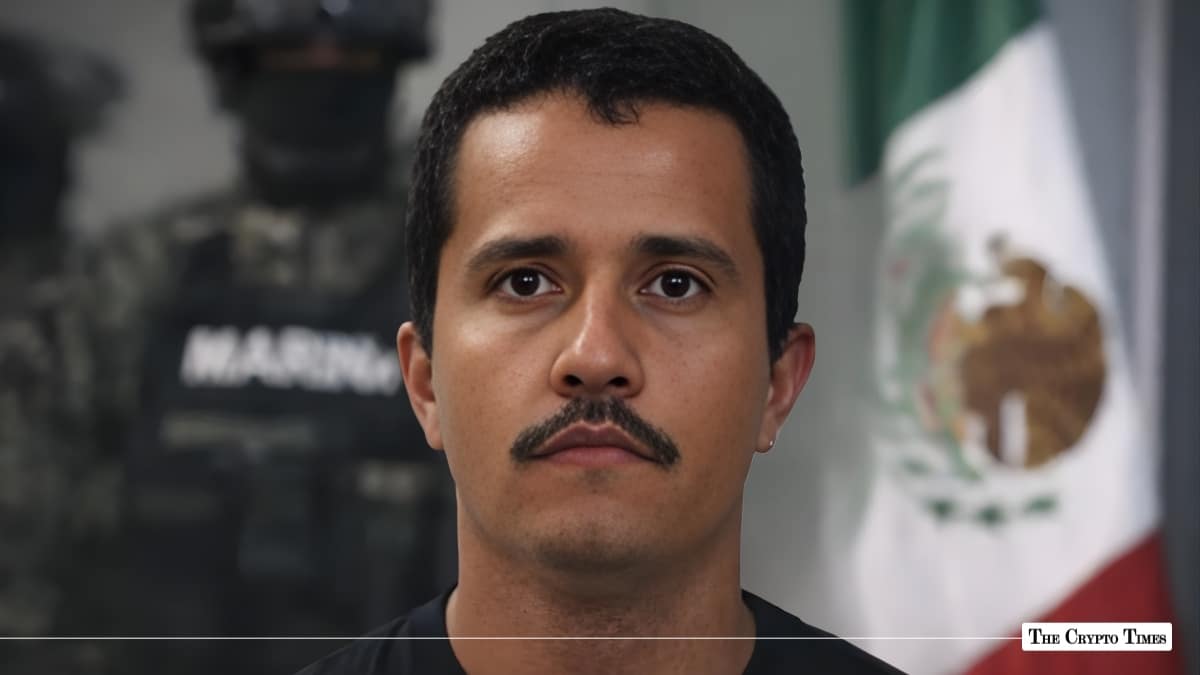
A viral post on X, published on March 10, 2026, by an account named Rashid bin Saeed, claims that Mexican drug lord Nemesio Oseguera Cervantes, known as “El Mencho,” stored his “entire $10 billion fortune” in Bitcoin, that the U.S. government seized 147,000 BTC from him following his death, and that this constitutes the “biggest government Bitcoin seizure ever recorded.”
The post amassed over 19,200 views and was widely shared. The Crypto Times investigated every major claim in the thread and found them to be either fabricated or grossly exaggerated. There is no credible evidence that El Mencho held a personal Bitcoin fortune anywhere near $10 billion, nor is there any record of a 147,000 BTC seizure linked to CJNG.
What the viral post claims
The thread asserts that El Mencho was “the most cancelled man on earth” who chose Bitcoin as his savings account, allegedly converting $10 billion into roughly 147,000 BTC at a price of $68,000 per coin. It claims these coins were seized by the U.S. after his death, that they vanished from circulation in “a single ordeal,” and that the move removed 0.7% of Bitcoin’s entire supply from the open market.
The post further claims that “unconfirmed but massive reports” indicate El Mencho’s teams managed cold wallet security and that every government seizing Bitcoin leads to reduced supply, rising prices, and a bullish macro catalyst.
Claim 1: El Mencho had a $10 billion Bitcoin fortune
Verdict: FALSE
The U.S. Drug Enforcement Administration estimated El Mencho’s personal net worth at between $500 million and $1 billion at the time of his death on February 22, 2026. Former DEA agent David Tyree, who investigated El Mencho for years, told Forbes that his wealth was “so diversified” across hotels, investments, and passive income networks.
The broader CJNG cartel’s total assets were estimated by the Mexican government at around $50 billion, but this includes the entire organization’s holdings across real estate, vehicles, weaponry, and illicit cash, not a single individual’s personal Bitcoin wallet.
No U.S. or Mexican law enforcement agency, no blockchain analytics firm such as Chainalysis, TRM Labs, or Elliptic, and no credible media outlet has ever reported or verified the existence of a $10 billion personal Bitcoin stash held by El Mencho.
Claim 2: The U.S. seized 147,000 BTC from El Mencho
Verdict: FALSE
As of February 2026, the entire U.S. federal government holds approximately 328,000 BTC accumulated from all criminal and civil seizures over more than a decade. This includes landmark cases such as the Silk Road marketplace (approximately 69,000 BTC), the Bitfinex hack recovery (approximately 94,000 BTC), the James Zhong fraud case (approximately 51,000 BTC), and the recent $15 billion LuBian/Prince Group forfeiture involving approximately 127,000 BTC from a Chinese mining operation.
No seizure of 147,000 BTC linked to CJNG or El Mencho appears in any DOJ forfeiture filing, Arkham Intelligence on-chain tracking, or U.S. Marshals Service record. The post’s claim that a single cartel seizure accounts for nearly half of the government’s total Bitcoin holdings is entirely without basis.
Claim 3: El Mencho’s cartel operated a sophisticated Bitcoin cold wallet infrastructure
Verdict: UNVERIFIED / MISLEADING
CJNG’s documented use of cryptocurrency is real but far smaller in scale than the viral post suggests. A March 2025 Chainalysis report found that suspected China-based chemical traders received over $37.8 million in cryptocurrency between 2018 and 2023, with major Mexican cartels, including CJNG, identified as buyers. FinCEN confirmed in 2024 that Mexico-based criminal organizations used Bitcoin, Ethereum, Monero, and Tether to purchase fentanyl precursor chemicals.
Court documents revealed that a single crypto exchange account linked to Mexican and Colombian cartels processed about $15 million in crypto between 2020 and 2023. These are documented figures in the tens of millions, not $10 billion. While cartels have adopted crypto for cross-border money laundering, the claim that El Mencho personally maintained cold wallets holding a Bitcoin fortune larger than El Salvador’s entire national reserve is entirely unsupported by any on-chain evidence or law enforcement investigation.
What actually happened
On February 22, 2026, Mexican military forces, aided by U.S. intelligence from the Joint Interagency Task Force-Counter Cartel, killed El Mencho during an operation in Tapalpa, Jalisco. His death triggered widespread retaliatory violence by the CJNG across at least 20 Mexican states, including road blockades, vehicle fires, and armed clashes that killed over 25 National Guard members.
The U.S. government holds approximately 328,000 BTC in its Strategic Bitcoin Reserve, established by Executive Order 14233 signed in March 2025, but these holdings come from dozens of unrelated seizures over many years.
The most recent notable government wallet movement was a 0.33 BTC transfer on March 3, 2026, from a “Miguel Villanueva Seized Funds” wallet, a routine administrative transfer unrelated to CJNG. No on-chain data from Arkham Intelligence, CryptoQuant, or any other blockchain analytics firm supports a 147,000 BTC cartel seizure in February or March 2026.
Why misinformation like this matters
Posts like this exploit high-profile events, in this case, the death of one of the world’s most wanted drug lords, to craft narratives designed to drive engagement around Bitcoin’s supply mechanics. By framing a fabricated seizure as a bullish supply shock, the post encourages retail investors to act on false information.
The claim that “every government seizing Bitcoin” leads to reduced supply and higher prices is a simplistic misrepresentation of how the U.S. Strategic Bitcoin Reserve works. Under Executive Order 14233, seized Bitcoin is retained rather than sold, but this policy applies to all forfeited BTC; it is not driven by a single cartel event. Responsible market participants should verify on-chain data through tools like Arkham Intelligence and cross-reference government forfeiture filings before acting on social media claims.
Also Read: US Government Makes Small Bitcoin Transfer Amid Iran War