Key Highlights
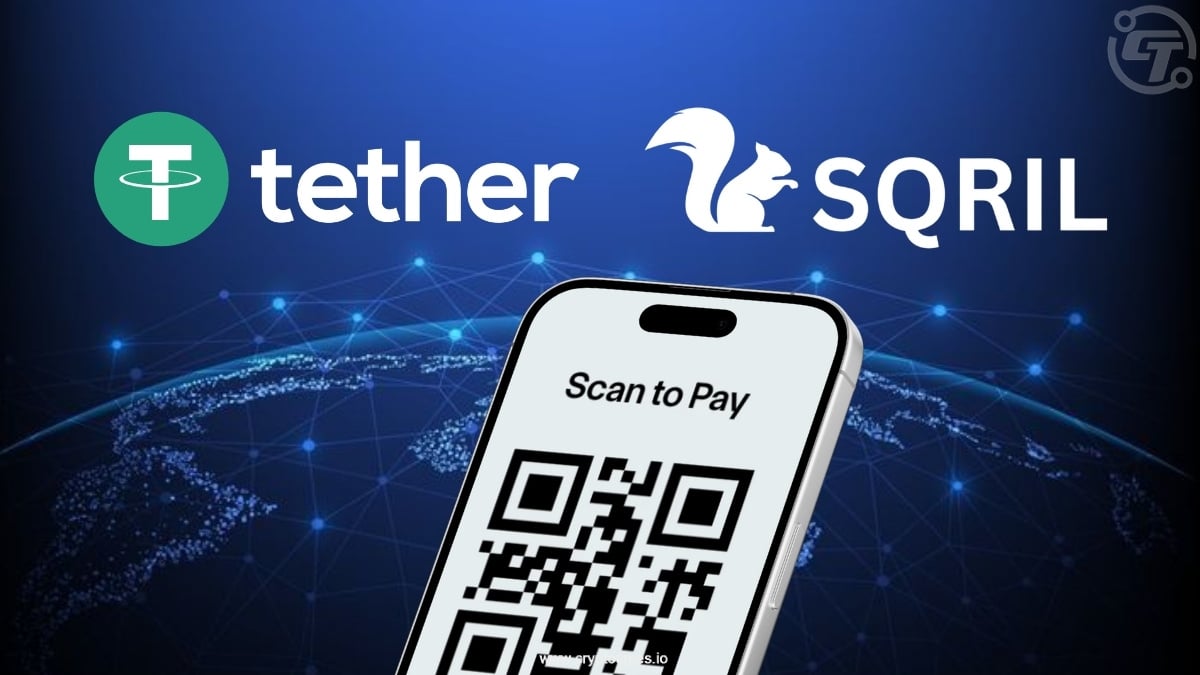
- Tether has invested in SQRIL, a Southeast Asia–based startup building cross-border QR payment infrastructure.
- SQRIL connects national QR systems, allowing users to pay abroad using local QR codes and currencies.
- The investment reflects Tether’s focus on payments infrastructure rather than consumer-facing crypto products.
Stablecoin issuer Tether has invested in SQRIL, a Southeast Asia–based payments company working on cross-border QR code payments for banks, e-wallets, and fintech platforms across Asia, Africa, and Latin America.
The investment ties Tether to a payments system that operates quietly in the background, without any direct consumer crypto product attached to it.
SQRIL is building an API-based payment switch that allows users of one country’s banking or wallet app to scan and pay QR codes in another country. The customer pays in their own currency, while the merchant receives funds in local currency. Currency conversion and settlement are handled by SQRIL as part of the transaction.
How the system works
According to SQRIL Founder and CEO Malcolm Weed, “any traditional bank such as Barclays or Bank of America, or neobanks such as Venmo, Revolut or Cash app can integrate with our APIs and allow their user base to scan and pay local QR codes across Asia, Africa and Latam. Users would pay with their home currency, and the merchant in the foreign country would receive their local currency. SQRIL would handle the forex and local payout in the destination currency.”
SQRIL is not trying to attract consumers directly. It does not offer a wallet, a payment app, or a branded checkout experience. Instead, it positions itself as a technical layer connecting national QR systems that were never designed to work with one another.
Why QR payments matter outside the West
In much of Asia, QR code payments are already part of daily life. In countries like the Philippines, Vietnam, Indonesia, and Thailand, people routinely pay by scanning a code, whether they are in a convenience store, a café, or buying something from a street vendor. These systems are usually built around national standards, often supported or overseen by central banks.
Similar payment patterns are starting to take hold in parts of Latin America and Africa, where real-time payment systems are spreading faster than card infrastructure ever did. The systems work well inside their own borders. The problem begins the moment a user tries to pay outside their home country.
What SQRIL has built so far
At present, SQRIL supports QR code payments in the Philippines, Vietnam, and Indonesia. It also enables bank transfers in Malaysia and Thailand. The company has said it plans to add more countries across Asia, Africa, and Latin America in the coming months.
The platform is still early. It functions in a limited number of markets and depends heavily on whether banks and wallet providers decide to integrate it. Without those partnerships, the technology remains useful in theory but limited in reach.
Why Tether’s involvement is not about retail crypto
Tether’s investment does not mean USDT is being pushed into QR payments. There is no indication that stablecoins are part of the payment flow today. The deal appears focused on infrastructure rather than consumer usage.
This fits with how Tether has been spending its time recently. The company has moved beyond stablecoins into other areas, including artificial intelligence (AI). It recently expanded its QVAC Genesis II dataset to 148 billion tokens and released it for open-source use by researchers and developers working on large language models.
Tether has also said it is exploring a mobile wallet built around Bitcoin and USDT, designed to be non-custodial and to run AI models directly on the device rather than relying on cloud services.
These efforts are not consumer-facing in the traditional sense. They sit underneath products, rather than competing for attention.
Why SQRIL, and not a larger payments player
Cross-border payments are not a new problem, and large payment networks already operate globally. SQRIL’s appeal lies in what it does not try to do. It does not issue accounts, manage users, or compete with banks and wallets for customer relationships.
By staying out of the spotlight, it can position itself as a neutral connector rather than another platform demanding control.
That kind of role is easier to integrate quietly, especially in markets where regulators and banks are cautious about foreign payment systems.
The regulatory clarity
Even with the technology in place, SQRIL cannot avoid the limits set by regulation. Payments are governed locally, not globally. Each national QR system follows its own rules around settlement, compliance, foreign exchange, and transaction monitoring.
SQRIL can connect systems, but it cannot harmonize how different countries regulate money movement. As it expands into Africa and Latin America, that complexity is likely to grow rather than shrink.
Progress will depend as much on regulatory cooperation as on technical execution.
A long-term infrastructure play
Weed believes QR payments will eventually become common worldwide, even in markets that still rely heavily on cards.
“Usually you see developed world technologies making their way to emerging markets, but I really believe this will happen in the reverse,” he said.
Whether that happens will depend less on consumer behavior and more on whether institutions are willing to align their systems.
For now, Tether’s backing of SQRIL looks less like a push for immediate disruption and more like a quiet investment in payment plumbing. If it works, it will do so without much attention. If it doesn’t, it will fail just as quietly.
Also Read: BitVentures Launches Digital Assets Segment via Crypto Mining Deal