Key Highlights
- FSRA approves Ripple’s USD-backed RLUSD as an Accepted Fiat-Referenced Token, allowing regulated use within ADGM.
- Market cap surpasses $1.2B, with Ripple emphasizing transparency, full USD reserves, and rising institutional adoption.
- UAE strengthens its role as a digital-asset hub, supporting RLUSD integration into payments, capital markets, and cross-border finance.
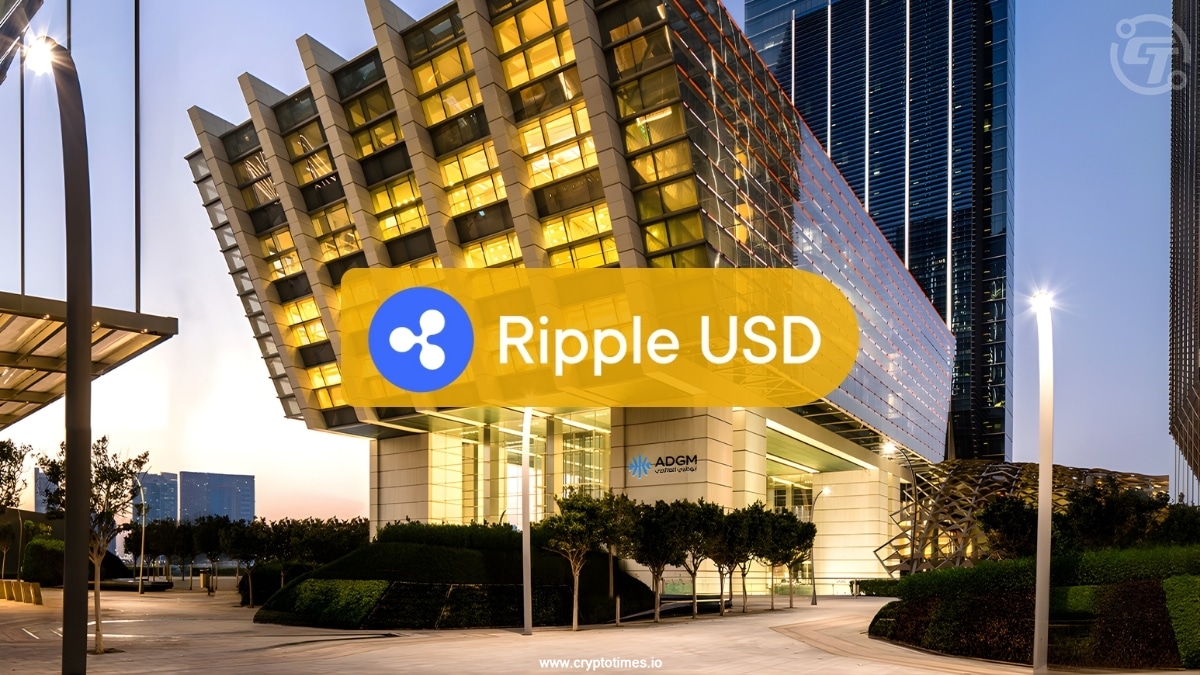
Ripple’s U.S. dollar-backed stablecoin, Ripple USD (RLUSD), has officially been approved by Abu Dhabi’s Financial Services Regulatory Authority (FSRA) as an Accepted Fiat-Referenced Token.
The approval allows its use within the Abu Dhabi Global Market (ADGM), the UAE capital’s international financial center known for its strict regulatory standards.
What the approval means
With the FSRA’s recognition, RLUSD can now be used by authorized firms licensed in ADGM, as long as they meet the regulatory responsibilities tied to the use of fiat-referenced tokens.
A fiat-referenced token refers to a digital asset whose value is pegged to a government-issued currency, in this case, the U.S. dollar.
The development adds another milestone for Ripple in the Middle East, where regulators have been more active in building frameworks for stablecoins and digital assets.
Ripple’s position and market growth
Jack McDonald, Senior Vice President of Stablecoins at Ripple, said the regulatory nod supports the company’s focus on compliance.
“The FSRA’s recognition of RLUSD as a Fiat-Referenced Token reinforces our commitment to regulatory compliance and trust – two non-negotiables when it comes to institutional finance,” he said.
He added that with the token’s market size passing the billion-dollar mark, adoption among institutions is rising.
“With a market capitalization of over $1 billion and growing adoption in core financial uses like collateral and payments, RLUSD is quickly becoming a go-to USD stablecoin for major institutions. This momentum is helping drive the next wave of secure, compliant digital asset adoption around the world.”
RLUSD was issued under a New York Department of Financial Services (NYDFS) Limited Purpose Trust Company Charter, a regulatory structure used for specialized financial entities. The stablecoin has crossed $1.2 billion in market capitalization since launching in late 2024.
According to Ripple, RLUSD’s backing includes 1:1 USD reserves held in high-quality liquid assets, with third-party attestations, segregated reserves, and clear redemption terms.
Middle East as a digital asset hub
Ripple executives highlighted the UAE’s role in shaping global crypto regulation.
Reece Merrick, Ripple’s Managing Director for the Middle East and Africa, said: “The UAE continues to set a global benchmark for digital asset regulation and innovation. ADGM is recognized globally for its robust and forward-thinking regulatory leadership, so this approval reinforces RLUSD as a compliant stablecoin that meets the highest standards of trust, transparency, and utility.”
He added that Ripple is seeing “surging interest” in the region. ADGM officials echoed this sentiment.
Arvind Ramamurthy, Chief Market Development Officer at ADGM, said, “We congratulate Ripple on achieving this important milestone. We look forward to seeing them make use of our robust regulatory framework, designed to support the sustainable growth of innovative firms and ensure the highest international standards of governance and compliance, which continues to set global benchmarks in the digital asset space.”
Use cases and integration
Ripple said regulatory clarity will support RLUSD’s integration into cross-border payments, enable smoother on- and off-ramps between fiat and crypto, and help capital markets activities through Ripple Prime, its institutional platform.
The Middle East has been a priority region for the company. Ripple recently entered Bahrain through a new strategic partnership and onboarded its first African custody customer, Absa Bank. Earlier adopters in the UAE include Zand Bank and Mamo, both of which use Ripple’s blockchain-based payment services.
Why this matters
The UAE has become one of the few global markets where regulators, banks, and fintech companies are actively shaping the rules for digital assets rather than reacting after the fact.
ADGM’s recognition gives RLUSD a place in a jurisdiction that has deliberately positioned itself as a controlled environment for institutional crypto activity. For Ripple, this approval opens the door to deeper adoption in a region that has rapidly turned into a proving ground for regulated stablecoins, cross-border payments, and digital settlement tools.
For institutions across the Middle East, it simply means they now have another reliable, regulator-approved stablecoin to work with at a time when the region’s demand for secure and compliant digital assets is growing quickly.
Also Read: RippleX Explores Native XRP Staking Amid Network Revenue Debate