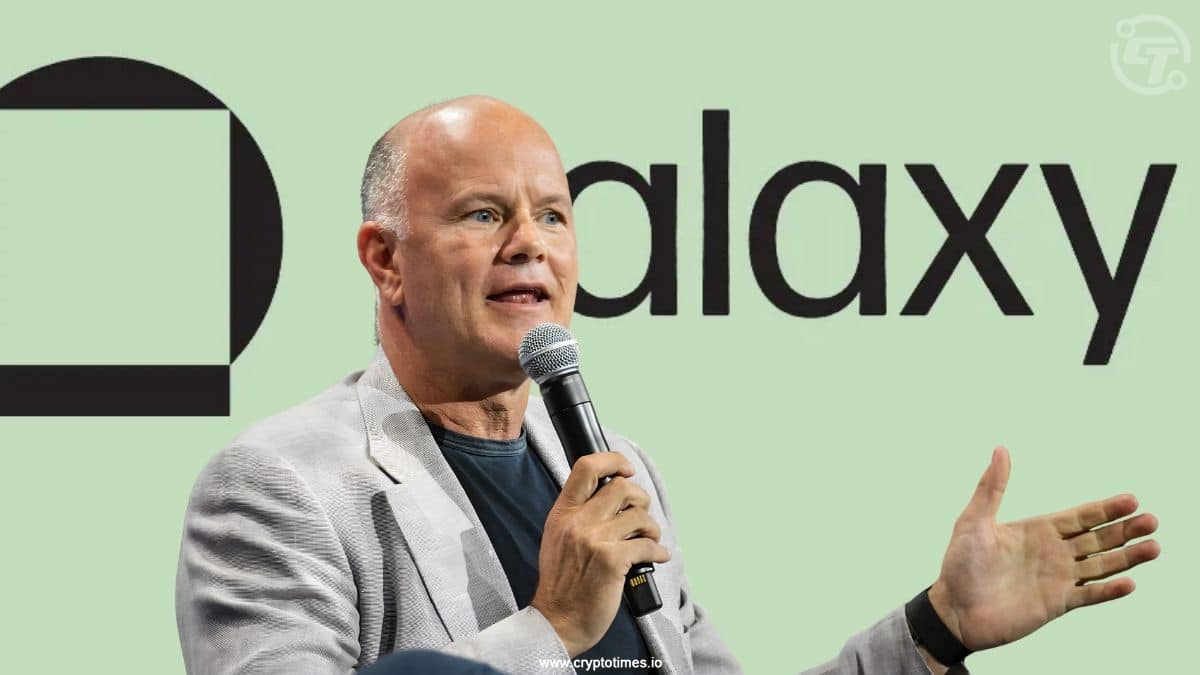
Mike Novogratz’s Galaxy Digital is taking its first serious step into prediction markets — a corner of the financial world that has suddenly become one of the year’s biggest curiosities.
The firm is in talks with Polymarket and Kalshi Inc. about providing liquidity on their platforms, a role usually handled by specialized trading shops. If it follows through, Galaxy would become one of the first major crypto infrastructure firms to get involved in this space.
Testing a new market
Galaxy Digital has built its brand catering to institutional investors in the crypto economy. Now it’s trying something a little different. Novogratz says the company has been “doing some small-scale experimenting with market-making on prediction markets,” adding that he expects the firm to “eventually” provide broader liquidity.
In practical terms, that means Galaxy would be one of the players constantly posting buy and sell orders, keeping the markets moving. It might sound mundane, but liquidity — or the lack of it- is one of the biggest challenges prediction markets face.
Without someone always willing to trade, prices can jump around or freeze entirely, which discourages new users.
Grey area for regulators
The legality of prediction markets in the U.S. is still complicated. Some states believe they fall under gambling rules. Federally, the Commodity Futures Trading Commission (CFTC) oversees event contracts, but so far it has not cracked down on platforms like Polymarket or Kalshi. That ambiguity has allowed the sector to grow, though it keeps larger institutions cautious.
Wall Street starts sniffing around
For years, prediction markets were too small for major trading firms to bother with. Susquehanna International Group has been one of the few openly involved. Recently, reports surfaced that Jump Trading has begun making markets on Kalshi, and AQR Capital Founder Cliff Asness has said his firm is looking at opportunities in sports betting more broadly.
Some prediction market platforms also run internal market-making desks. Kalshi operates one called Kalshi Trading, which the company says functions independently and without any access to insider information.
Moving into the mainstream
Interest in betting on real-world outcomes has exploded, especially in the run-up to the U.S. presidential election. For some traders, these platforms are simply a fun way to speculate. For others, they’re becoming a “crowd-sourced indicator” — a way to check public sentiment more dynamically than a poll.
Moreover, even big tech is giving the space a boost. Google Finance recently announced it will start showing live data from Polymarket and Kalshi. That visibility alone could pull prediction markets out of niche territory and place them more firmly in the everyday financial conversation.
A glimpse into the sector’s future potential
If firms like Galaxy Digital begin providing liquidity, prediction markets could feel more stable and professional. Prices would likely move more smoothly, large trades wouldn’t distort markets as easily, and the platforms could start resembling traditional financial exchanges rather than experimental betting hubs.
Galaxy’s early testing doesn’t guarantee a full entry, but the fact that a firm of its size is even considering it says a lot about where the sector is heading. Prediction markets are no longer just a quirky side project for crypto enthusiasts. They’re inching toward the financial mainstream, and Galaxy might help push them the rest of the way.
Also Read: Polymarket Traders Bet Trump Won’t Pick New Fed Chair By Christmas