Key Highlights
- Alibaba is exploring JPMorgan’s tokenized deposit system (JPMD) to speed up international B2B payments.
- The company is also launching a new tool called AI Mode, which helps buyers easily compare suppliers.
- Alibaba shared that it is also evaluating using stablecoins in the future.
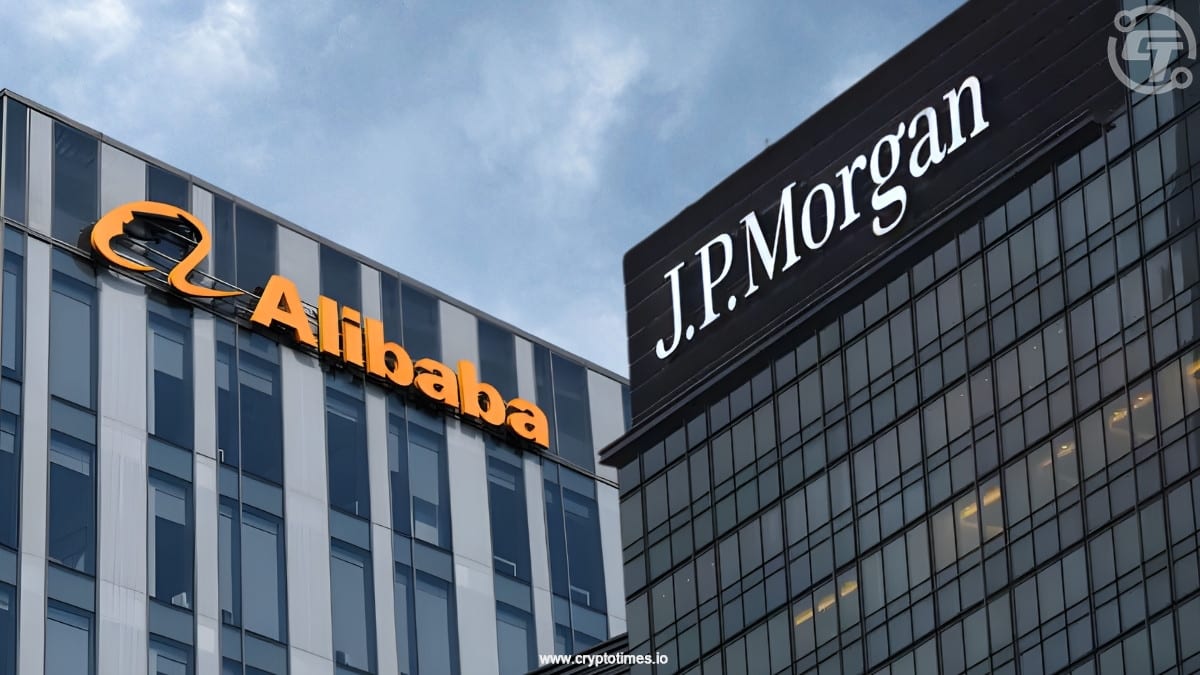
Alibaba, a leading e-commerce and retail company, is preparing a major change in the way money moves across its global B2B marketplace, exploring tokenized payments with JPMorgan. The company is even considering the use of stablecoin-like technology in the future.
In an interview, the company’s President Kuo Zhang told CNBC that the platform is exploring these digital payment tools as more tech and banking firms adopt tokenization to modernize cross-border transactions.
The goal is to reduce delays and high fees that often arise because international payments pass through several banks and involve multiple currencies.
Tokenized currency with JPMorgan
The most significant development concerns international payments. Cross-border B2B transactions typically take days to settle because they pass through several financial intermediaries.
To shorten this timeline, Alibaba is looking at tokenized versions of traditional currencies like the U.S. dollar and euro. These are digital representations of money held at banks and can move on blockchain systems, potentially reducing the number of middle steps involved.
To roll out this system, Alibaba plans to work with JPMorgan, which has developed its own tokenization technology and recently introduced a payment token called JPMD for business transactions.
After gaining experience with tokenized money transfers, Zhang said the company will also evaluate whether stablecoins could be useful in particular cases.
Smarter search with AI mode
Alongside the payment update, Alibaba has introduced a new AI-based subscription feature called AI Mode. The tool is designed to let buyers search suppliers using more detailed criteria, such as pricing, production capacity, shipping options, and reliability.
Instead of manually checking multiple supplier pages, users can rely on the AI system to compare information in one place. Zhang told CNBC that many businesses are already shifting toward AI-driven search, especially in complex global supply chains.
With AI Mode, the company is considering a subscription model priced at roughly $20 per month or $99 per year, though the final pricing has not been decided. This would add a new revenue stream to a division that mainly earns from marketing services and cross-border trade functions.
New updates on the horizon
Another update expected in December is agentic pay, an AI tool that drafts contracts between buyers and suppliers by analyzing their message history.
Many of these agreements are currently created offline and then uploaded, adding extra steps. The new feature would generate a draft automatically, with both sides reviewing it before approval. The aim is to reduce delays in a process that is often slowed by fragmented communication.
Also Read: JPMorgan and DBS to Launch 24/7 Cross-Bank Token Payments