Crypto Times Logo Black
Google News Follow Banner
  • News
    • Market
    • Bitcoin
    • Ethereum
    • Altcoins
    • Regulations & Policies
    • DeFi News
    • Blockchain News
    • Industry
  • Exclusive
  • Opinion
  • Learn
    • Explained
    • How To
    • Insights
  • Podcasts
  • More
    • About Us
    • Our Authors
    • Contact Us
    • Editorial Policy
The Crypto TimesThe Crypto Times
  • All News
  • Market
  • Bitcoin
  • Ethereum
  • Altcoins
  • Regulations & Policies
  • Blockchain
  • DeFi
  • Industry
  • Exclusive
  • Opinion
Search
  • News
    • Market
    • Bitcoin
    • Ethereum
    • Altcoins
    • Regulations & Policies
    • Blockchain
    • DeFi
    • Industry
    • Exclusive
    • Opinion
  • Learn
    • Explained
    • How To
    • Insights
  • Quick Links
    • About Us
    • Our Authors
    • Contact Us
    • Editorial Policy
    • AI Policy
    • Sponsored & Advertorial Policy
  • Podcasts
Follow US
© 2026 By Crypto Times. All Rights Reserved.
Exclusive

Trezor’s Safe 7 Puts Pressure on Rivals for Quantum-Ready Wallets

The Czech wallet maker introduces an open secure chip and post-quantum firmware, challenging the industry’s dependence on closed hardware.

Written By:
Jahnu Jagtap

Reviewed By:
Divya Mistry

Last updated: January 21, 2026 1:27 AM
Published October 21, 2025 5:06 PM
Share
Last updated: January 21, 2026 1:27 AM
Published October 21, 2025 5:06 PM
Trezor’s Safe 7 Puts Pressure on Rivals for Quantum-Ready Wallets

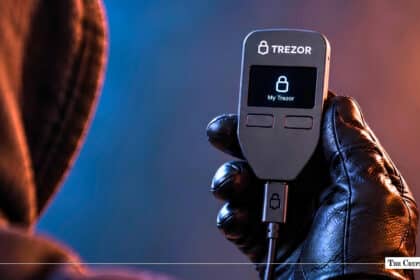
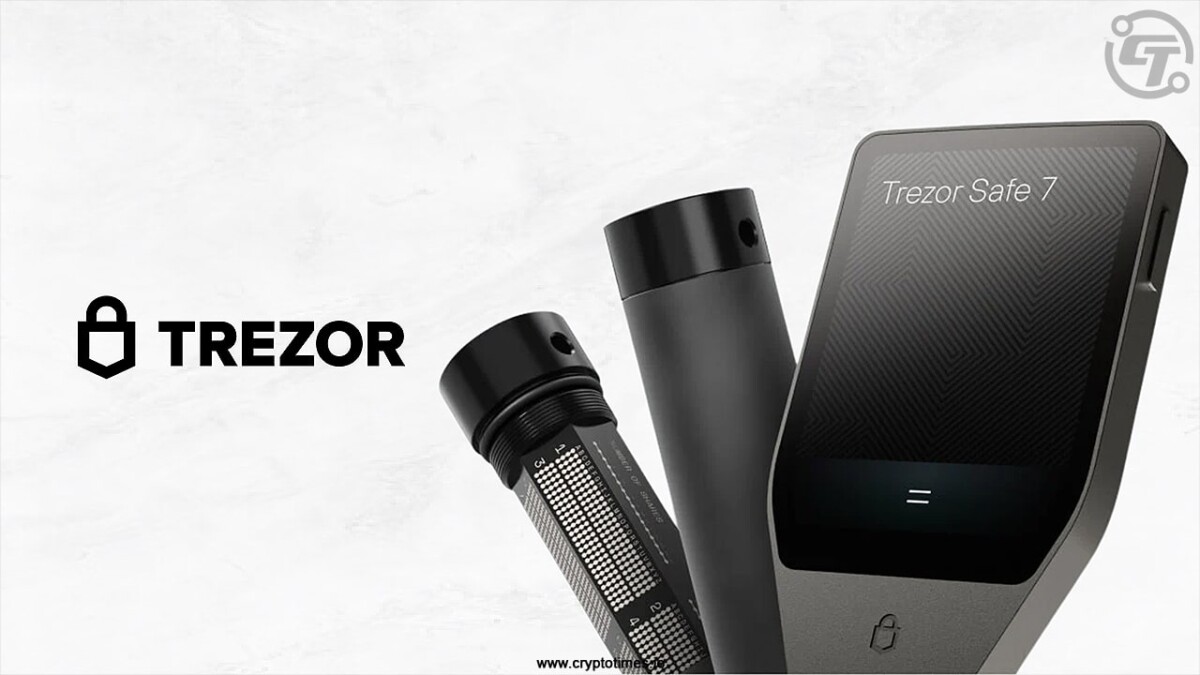
Trezor has launched its latest hardware wallet, the Safe 7, featuring a fully open-source secure element and post-quantum firmware signing. 

Unveiled at a launch event in Prague, the device reflects Trezor’s long-standing push for transparency in an industry that typically relies on closed, NDA-protected hardware components.

The company said the Safe 7 integrates a new chip, Tropic01, developed by semiconductor startup Tropic Square, which Trezor co-founded in 2020. Unlike most commercial secure elements from vendors such as STMicroelectronics or Infineon, Tropic01’s design and firmware are fully auditable and available for public testing. Researchers can buy and analyze the chip without signing non-disclosure agreements, a condition that has traditionally limited external scrutiny of wallet hardware.

Tomas Susanka, Trezor CTO hailed this a major shift in the industry, he said “No one is going to lie to you about its security.You don’t have to trust me on that. You can now verify.”

For years, every wallet provider has used proprietary firmware and NDA-bound silicon; Trezor’s public critique of that approach dates back to its early days. The company said its earlier experiments with commercial chips revealed vulnerabilities that manufacturers were unwilling to disclose publicly. The firm claimed this experience pushed it to design its own hardware. Trezor claims the change allows for “verifiable security” rather than vendor-assured protection.

Breaking down Safe 7’s architecture

The new device also features a dual-chip architecture, pairing Tropic01 with a secondary NDA-free element to improve tamper resistance. It includes hardware-level limits on PIN attempts, automatic data erasure on detected intrusion, and wireless connectivity secured through a proprietary open protocol layered over Bluetooth.

Perhaps the most notable shift is the wallet’s post-quantum bootloader, signed with algorithms resistant to future quantum-computer attacks. Most wallets, including those from institutional-grade custodians, have yet to implement similar safeguards. Trezor said the change allows firmware updates to remain verifiable even if current public-key systems become obsolete.

Preparing for the Quantum Era

In a forward-looking twist, Safe 7’s bootloader, the component responsible for firmware updates, is signed with a post-quantum cryptographic algorithm, making it resistant to future quantum decryption methods.

Trezor acknowledged that Bitcoin and most cryptocurrencies aren’t yet quantum-proof but argued that wallet security must “act before the threat materializes.”

Why it matters

By opening the chip’s design and challenging the secrecy of secure hardware, Trezor is effectively forcing a transparency debate in the hardware wallet industry.

For years, manufacturers have relied on proprietary secure elements chips whose inner workings users and even independent auditors can’t examine. Trezor’s public rejection of that model marks one of the most radical pivots in consumer crypto security since hardware wallets first appeared.

For users, the implications extend beyond technology. As crypto custody models evolve with ETFs, institutional vaults, and account abstraction competing for convenience, open hardware advocates argue that verifiable self-custody remains the only way to guarantee independence from intermediaries.

The Safe 7 is priced at $249, with shipping expected later this year.

Also read: How a Govt Collapse Inspired the Biggest Wallet Company

Disclaimer: The information researched and reported by The Crypto Times is for informational purposes only and is not a substitute for professional financial advice. Investing in crypto assets involves significant risk due to market volatility. Always Do Your Own Research (DYOR) and consult with a qualified Financial Advisor before making any investment decisions.

Follow The Crypto Times on Google News to Stay Updated!      Google News
Google News Banner

Share This Article
Whatsapp Whatsapp LinkedIn Telegram Copy Link
Jahnu Jagtap - Crypto Research Analyst at The Crypto Times
By Jahnu Jagtap
Follow:

Jahnu Jagtap is a Research Analyst with over 5 years of experience in crypto, finance, fintech, blockchain, Web3, and AI. He holds a BSc in Mathematics and is certified in Blockchain and Its Applications (SWAYAM MHRD), Cryptocurrency (Upskillist), and NISM Certifications. Jahnu specializes in technical, on-chain, and fundamental analysis, while also closely tracking global macro trends, regulations, lawsuits, and U.S. equities. With a strong analytical background and editorial insight, he drives content that delivers clarity and depth in the fast-evolving world of digital finance.

Divya Mistry - Content Editor at The Crypto Times
By Divya Mistry
Follow:
Divya Mistry is a Content Editor with over 9 years of experience in news, PR, marketing, and research. Armed with a Master’s Degree in English Literature from the University of Mumbai, she specializes in crafting and refining long-form content across digital and print platforms. Over the years, Divya has contributed to and shaped content for leading brands across a range of industries, including real estate, healthcare, vertical transport, entertainment, lifestyle, education, EdTech, tech, and finance. Her research work has been featured on platforms like DNA India, Forbes, and Elevator World India. She now brings her editorial and research skills to explore the rapidly evolving world of cryptocurrency.

Latest News

What Does Bitcoin Become in a World Questioning the Dollar?
40+ DeFi Protocols Shut Down in 2026 Inside the $770M Hack Crisis Reshaping Crypto
40+ DeFi Protocols Shut Down in 2026: Inside the $770M Hack Crisis Reshaping Crypto
TON Leads Crypto Staking Returns as Telegram Ecosystem Expands
TeraWulf Earns More From AI Computing Than Bitcoin Mining in Q1
US Senator Warren Flags Meta’s Stablecoin Project Potential Risk

Find Us on Socials

You may also like

Michael Saylor Breaks ‘Never Sell’ Vow: Why and How Will Strategy Offload Bitcoin?

Michael Saylor Breaks ‘Never Sell’ Vow: Why and How Will Strategy Offload Bitcoin? 

How DSJ Exchange Operated for 12 Months Despite Warnings from 13 Regulators

How DSJ Exchange Operated for 12 Months Despite Warnings from 13 Regulators

Anthropic Brings AI Compliance Agents to Banking via Claude — Crypto Exchanges Are Next

Anthropic Brings AI Finance Agents to Banking via Claude — Crypto Exchanges Are Next

$41.5 Million Frozen Inside the Takedown of the DSJ Exchange Ponzi Scheme

$41.5 Million Frozen: Inside the Takedown of the DSJ Exchange Ponzi Scheme

The Crypto Times Logo PNG

Providing real-time, accurate Crypto reporting. Your trusted source for Crypto News and Research.

Stay Updated

All News
Exclusive
Opinions
Learn
Podcasts

Company

About Us
Our Authors
Editorial Policy
AI Policy
Advertorial Policy

Get In Touch

Contact Us
Career

Find Us on Socials

X-twitter Linkedin Telegram Youtube Instagram

© 2026 The Crypto Times | A BITROCK TECHNOLOGIES L.L.C. Company.

DMCA.com Protection Status
  • Terms and Conditions
  • Disclaimer
  • Privacy Policy
  • Cookie policy
Do Not Sell or Share My Personal Information