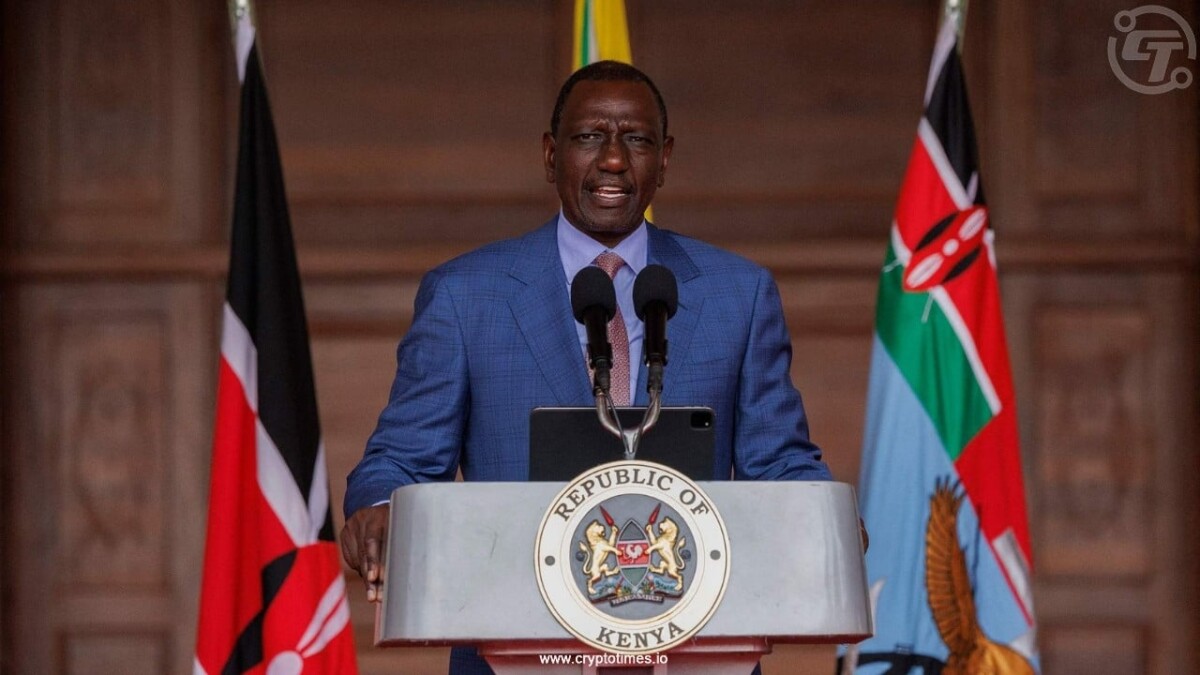
Kenyan lawmakers have passed a historic bill that will regulate digital assets like cryptocurrencies. Last week, the parliament passed the Virtual Asset Service Providers (VASP) Bill. It is now waiting for President William Ruto to sign it into law.
According to a report by Reuters, the law was created to clear up the confusion about digital assets and bring in more investment while protecting consumers. Kuria Kimani, the Head of the Finance Committee in Kenya’s National Assembly, says that this move puts Kenya in the same league as South Africa as one of the few African countries with a full set of laws for cryptocurrencies.
“We are hoping that Kenya can now become the gateway into Africa for digital asset businesses. The majority of young people between 18 and 35 are already using virtual assets for trading, payments, and investments,” Kimani stated. “The act provides much-needed regulatory clarity for investors and innovators.”
The Central Bank of Kenya will be responsible for giving licenses to stablecoin issuers and other virtual asset products. The Capital Markets Authority (CMA) will be in charge of cryptocurrency exchanges and trading platforms. This dual oversight is meant to make sure that the whole industry is stable and responsible.
The government’s action comes at a time when more people around the world are increasingly looking at dollar-backed stablecoins. International regulators have however warned that these coins could threaten monetary sovereignty in developing countries. Kenya still thinks that regulation is the best way to use new ideas and boost growth in its fintech sector, despite concerns around it.
Kenyans embracing crypto
In August 2025, AfriBit Africa, a startup in Nairobi, helped with more than 2,000 Bitcoin transactions in Kibera, which is one of Kenya’s biggest urban slums. Even though Kenya has a well-developed mobile money system, more than 80% of Kibera’s 250,000 residents can’t use formal banking services.
AfriBit Africa’s plan includes giving informal workers grants in cryptocurrency, teaching women and young people how to make money by upcycling things, and letting more than 40 local businesses accept Bitcoin payments. “We’re not here to preach Bitcoin,” said Mdawida. We’re here to show that even the most ignored groups can start a financial revolution with tools they really own.
Also Read: Bhutan Migrates Its National ID System from Polygon to Ethereum