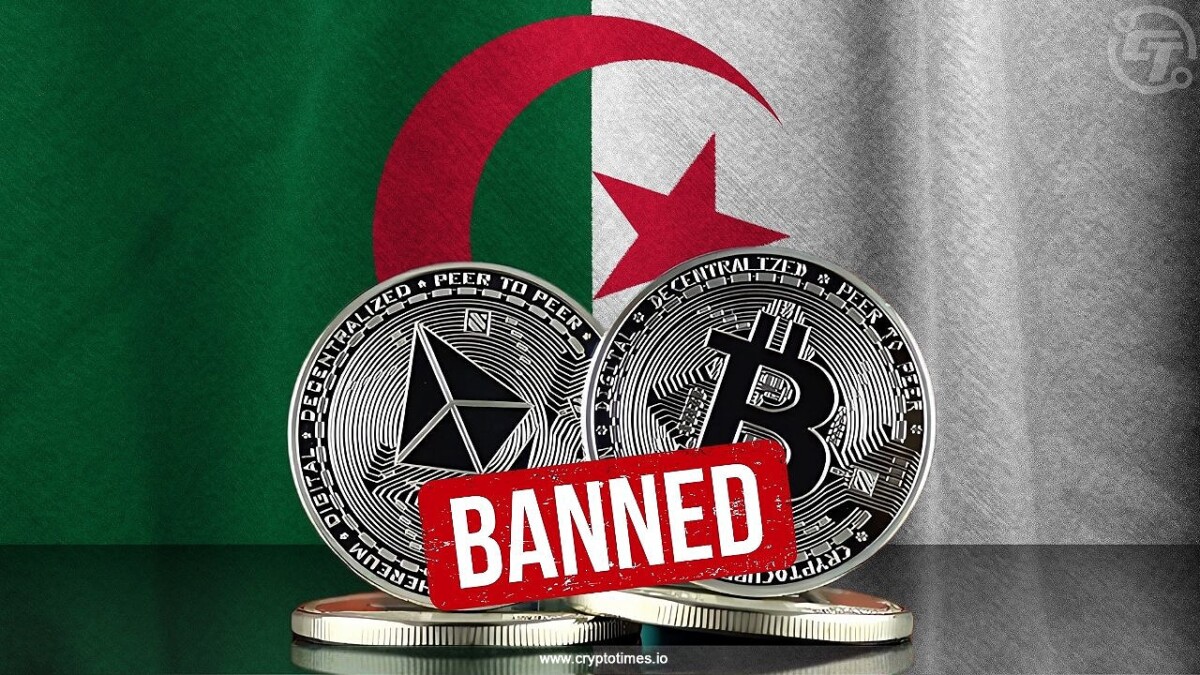
Algeria enacted comprehensive cryptocurrency prohibition legislation on July 24, 2025, under Law No. 25-10, making all digital asset activities criminal offenses punishable by prison sentences and fines up to $7,000 USD.
The legislation amends Algeria’s anti-money laundering (AML) framework to explicitly criminalize cryptocurrency use, trading, mining, and promotion, according to Official Journal No. 48 published July 24. Algeria joins a limited group of nations imposing total cryptocurrency bans with criminal penalties.
Comprehensive Digital Asset Prohibition
As reported by the local media outlet Fibaldi, Law No. 25-10 prohibits all cryptocurrency-related activities within Algerian territory, including issuing, buying, selling, or holding any cryptocurrencies; creating, operating, or promoting cryptocurrency trading platforms, digital wallets, or exchange services; cryptocurrency mining operations are specifically prohibited, particularly targeting energy-intensive mining in Algeria’s southern provinces where government electricity subsidies are highest.
Moreover, the country has also banned advertising or promoting any cryptocurrency projects or services that are criminalized under the new framework. The law categorizes all cryptocurrencies as instruments for illicit finance and unauthorized capital movement, eliminating any legal use cases within Algeria’s borders.
Criminal Penalties and Enforcement
The Article 31a of the new law framework establishes specific penalties for cryptocurrency violations, including two months to one year imprisonment for basic cryptocurrency offenses, with extended sentences for organized crime or terrorism financing connections.
It also fines ranging from 200,000 to 1,000,000 Algerian dinars ($1,500 to $7,000 USD) based on violation severity. Enhanced penalties apply when cryptocurrency activities involve organized criminal networks or terrorist financing operations, potentially resulting in multi-year prison sentences.
Multi-Agency Enforcement Strategy
Algeria will deploy comprehensive surveillance and enforcement mechanisms involving multiple government agencies:
- Financial Oversight: The Bank of Algeria and Financial Intelligence Unit (FIU) will monitor digital transactions and cross-border cryptocurrency flows.
- Banking Supervision: The Banking Commission will enforce cryptocurrency prohibition across all licensed financial institutions.
- Digital Surveillance: Law enforcement agencies will monitor VPN usage and digital platforms to identify cryptocurrency trading activity.
- Physical Operations: Authorities will conduct raids targeting cryptocurrency mining operations, particularly in southern provinces with subsidized electricity.
The enforcement strategy specifically targets Algerians accessing international platforms like Binance, Bybit, and OKX through virtual private networks and other circumvention tools.
Regional Cryptocurrency Restrictions
Algeria’s total prohibition strengthens restrictive cryptocurrency policies across North Africa and the Middle East. Morocco banned cryptocurrency transactions in 2017, but recently began exploring regulated licensing frameworks for digital assets, while Egypt continues issuing central bank warnings against cryptocurrency use.
Another African nation, Tunisia maintains restrictive policies limiting cryptocurrency trading while permitting limited blockchain technology development.
Algeria’s approach represents the most comprehensive cryptocurrency criminalization in the MENA region, potentially delaying regional digital asset innovation while addressing government concerns about capital flight and energy subsidy abuse.
Economic and Policy Implications
The legislation addresses Algeria’s concerns about unregulated capital outflows and cryptocurrency mining’s impact on subsidized electricity resources. Algeria provides heavily subsidized electricity to citizens, making cryptocurrency mining operations economically attractive but fiscally burdensome for the government.
Energy-intensive Bitcoin mining operations in southern Algeria have reportedly increased electricity consumption significantly, prompting government action to preserve energy subsidies for intended domestic use.
The total prohibition approach contrasts with regulatory frameworks adopted by neighboring countries and may limit Algeria’s participation in emerging digital asset markets across the MENA region.
Also Read: Sen. Lummis Proposes Bill to Use Crypto in Home Loans