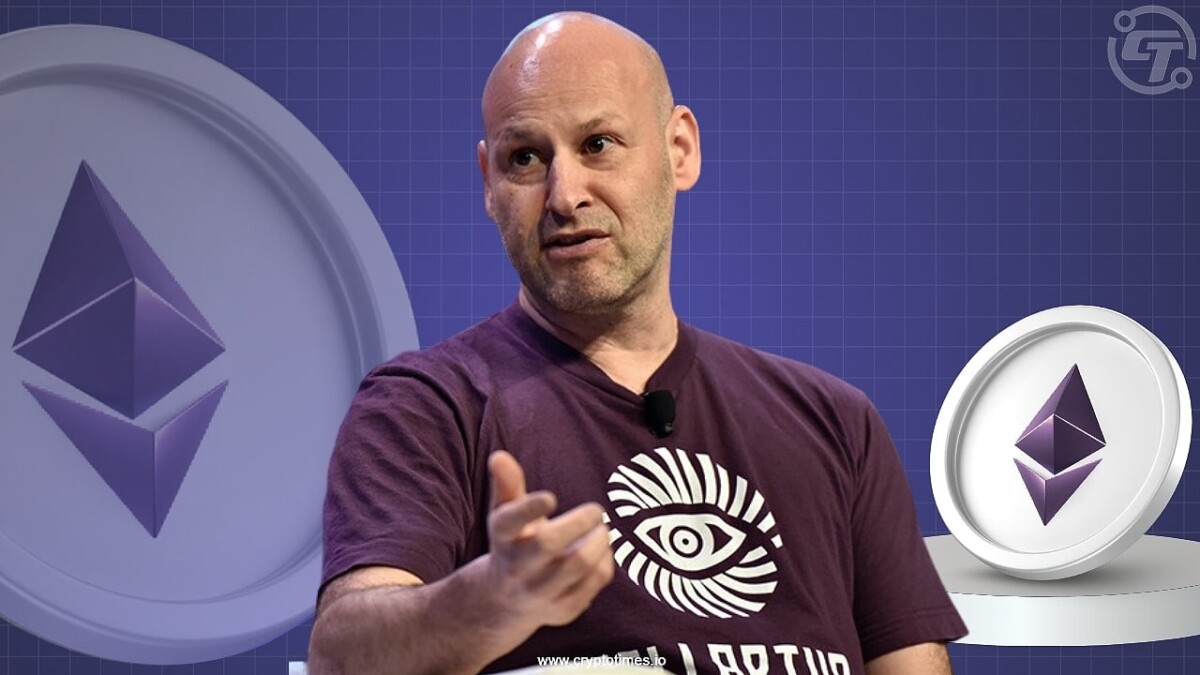
Ethereum Co‑founder Joe Lubin shared that while Bitcoin’s strength lies in the present, Ethereum’s promise is already unfolding. In a video shared by Bloomberg on July 28, he said that “Ethereum’s future is now,” as its adoption begins to outpace Bitcoin’s.
He noted Bitcoin is often seen as digital gold. But Ethereum works differently. It offers “trustware”, smart contracts that carry out deals automatically. Lubin said these systems allow rapid, low‑cost, and verifiable transactions. He added, “The next Bitcoin is Ether and Ethereum”.
Institutional demand for Ether is also rising. Firms are using Ether treasury strategies similar to Bitcoin’s treasury playbook. Public companies like BitMine Immersion, SharpLink Gaming, and Bit Digital have started holding large amounts of ETH. BitMine Immersion currently holds over 566,776 ETH, SharpLink Gaming approximately 438,017 ETH, and Bit Digital around 120,306 ETH.
Lubin argued these strategies are essential to reduce surplus supply and explain Ethereum’s value to investors. He praised SharpLink and BitMine for helping shape ETH demand. He said this shows Ethereum is now mature, usable, affordable, and operating under clearer regulations in the U.S.
Market reports support this narrative. According to Coinglass, Ethereum derivatives recorded over $109 billion in 24-hour volume, up by over 12%. This rise placed ETH ahead of Bitcoin in derivatives activity, showing a growing trader preference for Ethereum.
Meanwhile, decentralized finance and tokenisation growth drive broader interest in Ether. SosoValue data shows rising inflows into ETH spot ETFs, with net inflows reaching over 16.84K ETH. BlackRock’s ETHA ETF also gained strongly on the day, outpacing its Bitcoin ETF for the first time.
Ethereum recently went above $3,000 as more people showed interest in it. About 28% of all ETH is now locked up in staking, showing that many people plan to hold it for a long time. This means they trust how Ethereum will be used.
Ethereum is also the main network for stablecoins and tokenized assets. These are digital versions of traditional money and real-world items, like bonds or property, created and managed on the blockchain.
Lubin said he sees crypto’s direction moving toward decentralization. Ether and Bitcoin will both grow in time, but Ethereum’s utility and programmability make it the key platform for the new generation of finance.
Lubin’s point is clear: Ethereum is no longer just an idea. It has become a key part of the digital economy as more people are using it, big firms are backing it, and trading is growing. ETH may now be driving more volumes than Bitcoin, even though it faces some concerns with transaction fees and scalability issues.
Also Read: DeFi Market Hits $153B as Ethereum and Yield Farming Boom