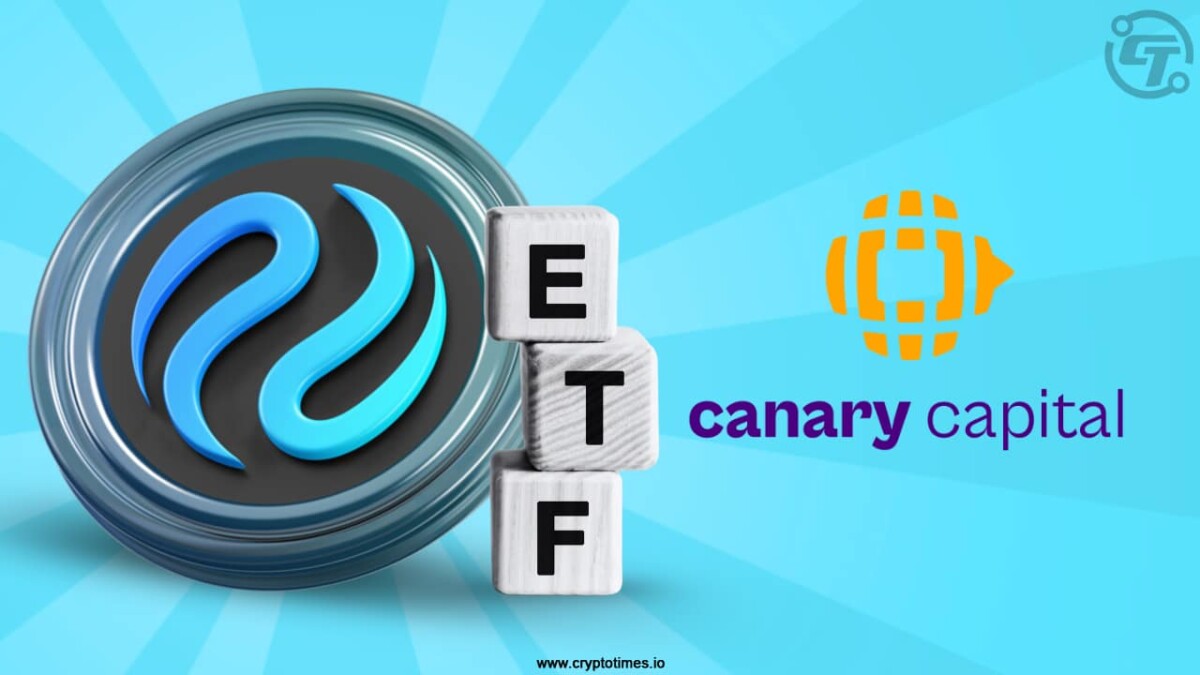
The Chicago Board Options Exchange (Cboe), through its BZX Equities platform, has officially asked the U.S. Securities and Exchange Commission (SEC) to approve a new exchange-traded fund (ETF) linked to Injective Protocol’s INJ token.
The fund, known as the Canary Staked Injective ETF, is being put forward by investment firm Canary Capital Group LLC. If it gets the green light, the ETF would let investors gain exposure to Injective’s native token (INJ), not just through its market price, but also by earning extra income from staking.
In simple terms, staking means locking the tokens into the Injective blockchain to help keep the network running. By staking the tokens, the fund can earn rewards, and those rewards would be passed on to investors.
So instead of just tracking the token’s market price, this ETF gives people a chance to earn a bit extra through staking.
Unlike regular crypto ETFs that only mirror the asset’s price, this one tries to boost returns by actually putting the tokens to work. According to the filing, Canary plans to use a regulated staking provider to manage the technical side of the process and pass those staking rewards directly to investors.
Staking is now one of the go-to ways for earning passive income in the Decentralized Finance (DeFi) space.
This ETF filing also shows how the investment and regulatory landscape is starting to shift. Back in May 2025, the SEC’s Division of Corporation Finance put out guidance saying that some types of staking might not count as securities offerings. A lot of firms saw that as a green signal to start building staking-based investment products.
The filing also arrives alongside Cboe’s separate submission for the Invesco Galaxy Solana ETF, part of a wave of spot ETFs that aim to provide regulated access to altcoins beyond Bitcoin (BTC) and Ethereum (ETH).
If approved, the Canary Staked Injective ETF would become only the third staking-enabled ETF in the United States, following the recent approval of staked Solana and staked Ethereum products in June.
The application represents the second step in the SEC’s two-stage approval process, which includes an initial S-1 registration followed by a 19b-4 filing from the listing exchange.
Also Read: SEC Delays Decision on Truth Social and Grayscale Crypto ETFs