Crypto Times Logo Black
Google News Follow Banner
  • News
    • Market
    • Bitcoin
    • Ethereum
    • Altcoins
    • Regulations & Policies
    • DeFi News
    • Blockchain News
    • Industry
  • Exclusive
    ExclusiveShow More
    Charlie Lee, creator of Litecoin, standing in front of a blue Litecoin corporate logo wall
    Litecoin Turns 15: Original Bitcointalk Records Show How Charlie Lee Launched LTC in 2011
    Elon Musk with folded arms flanked by a giant Bitcoin coin, Tesla electric car, and SpaceX rocket launch
    Elon Musk’s Tesla and SpaceX Still Hold Over 30,000 Bitcoin: Why Is He Not Selling?
    Is ‘Paul Le Roux’ Really Satoshi Nakamoto What the Record Actually Shows
    Is ‘Paul Le Roux’ Really Satoshi Nakamoto? What the Record Actually Shows
    Bitget exchange coin token set in front of a blurred FTX building backdrop.
    Is Bitget the Next FTX? What the $351.6 Million Hack Does and Doesn’t Have in Common
    Gold Bitcoin BTC coin standing vertically in front of a rising green financial candlestick chart
    Inside Bitcoin’s September 2026 Rally: BTC Reclaiming $87K, $2B in ETF Inflows and a Short Squeeze
  • Opinion
    OpinionShow More
    Donald Trump speaking at a presidential podium with the White House and U.S. Capitol building in the background.
    Trump Just Declared the Super Intelligence Era in the “Unites States.” So Who Controls It?
    Comparison of Bybit 12-hour, Bitget 85-hour, and WazirX 463-day response timers
    Bitget, Bybit Paid in Hours; WazirX Lost Least in Hacks at $235M, Held Users Hostage for 463 Days
    Jackson Hole 2026: Crypto Is No Longer Outside the Fed’s Door
    Jackson Hole 2026: Crypto Is No Longer Outside the Fed’s Door
    The Architecture of Trust Same Routes, New Risks in Global Tokenisation
    The Architecture of Trust: Same Routes, New Risks in Global Tokenisation
    The Architecture of Trust What 4,000 Years of Trade Teach Us About RWA Tokenisation
    The Architecture of Trust: What 4,000 Years of Trade Teach Us About RWA Tokenisation
  • Learn
    • Explained
    • How To
    • Insights
  • IndicesNew
    • India USDT Premium Index
    • India USDC Premium Index
  • Videos
  • More
    • About Us
    • Our Authors
    • Contact Us
    • Editorial Policy
    • Daily Crypto Puzzles
The Crypto TimesThe Crypto Times
  • All News
  • Market
  • Bitcoin
  • Ethereum
  • Altcoins
  • Regulations & Policies
  • Blockchain
  • DeFi
  • Industry
  • Exclusive
  • Opinion
Search
  • News
    • Market
    • Bitcoin
    • Ethereum
    • Altcoins
    • Regulations & Policies
    • Blockchain
    • DeFi
    • Industry
    • Exclusive
    • Opinion
  • Learn
    • Explained
    • How To
    • Insights
  • IndicesNew
    • India USDT Premium Index
    • India USDC Premium Index
  • Quick Links
    • About Us
    • Our Authors
    • Contact Us
    • Editorial Policy
    • AI Policy
    • Sponsored & Advertorial Policy
    • Daily Crypto Puzzles
  • Videos
  • Glossary
Follow US
© 2026 By Crypto Times. All Rights Reserved.
Exclusive

Will Google’s Willow Quantum Chip Breach Bitcoin One Day?

Written By Shubham Sahu
Fact Checked by Vaibhav Jha
Published 2024-12-12
Make The Crypto Times preferred on GoogleGoogle
Google Willow Chip a challenge for Bitcoin security

Tech Giant Google recently claimed a major breakthrough in quantum computing with their new chip “Willow” that made the global waves and caused tremors in the crypto community. Willow is claimed to solve the most complex problems in mere minutes that currently would take billions of years for even the most advanced present day super computers.

This has raised concerns in the crypto community that one day in near or distant future, Willow might be able to breach the encryption security of Bitcoin, thereby ending the dominance of the digital gold and web3 ecosystem.

Alphabet, the largest holding company of Google, is currently working on quantum computers that are touted to be much faster than today’s computers. The willow chip unveiled by Google doesn’t have any practical uses yet but its potential is immense, according to experts.

Understanding Google’s Willow Chip

The newly launched chip called Willow has 105 Qubits. “Qubit also known as the quantum bit is a basic unit of data or information in quantum computing.” Qubits are the building blocks of quantum computers and are fast but can make mistakes easily because they are sensitive to tiny disturbances. 

As these more qubits are added to a chip, these errors can increase, making the chip no better than a regular one. Scientists have been working on fixing these problems since the 1990s.In the recent report paper, Google showcased that they found a solution to connect the qubits in the Willow chip so that the error rate decreases as more qubits are added. These solution will make quantum computer more practical.

Google’s Willow Quantum Chip Spark Debate In Crypto Space

After the news broke out, the tech and crypto community discussions increased about the new quantum computing chip Willow will end the Bitcoin and other cryptocurrencies. Some have the concern that these computers could eventually break the security systems that protect Bitcoin and other cryptocurrencies. This could make them unsafe and unusable.

Talks in the community is that the quantum computer might become so powerful that it may crack the cryptographic codes that keep blockchain technology secure. However, experts believe that these computers are far from the cracking cryptographic codes as it still in its developing stage.

Is Quantum Computers Really A Threat To Bitcoin?

Quantum computing is different from the regular computing systems. Because of a property called superposition qubits also known as quantum bits can use bits that are either 0 or 1, both at the same time. Qubits can give these computers the power to handle a lot of data at once, solving complex problems much faster than regular computers.

Google’s quantum chip, Willow, has made significant advancements, it can now make qubits in-house using special materials that keep it stable. Google also developed techniques that protect the qubits from electromagnetic fields and cosmic rays.

Quantum computing poses two types of qubits-physical and logical. Physical qubits are the basic units, but they are prone to errors. Logical qubits are made by combining many physical qubits and using error correction to make them stable and reliable. Creating a logical qubit requires a lot of physical qubits.

Now keep this point in mind, because to break Bitcoin’s encryption it would need millions of logical qubits. Willow only has 105 physical qubits, so it’s still far from being able to break Bitcoin’s security. 

Bitcoin uses two main types of encryption: ECDSA 256 for transaction signatures and SHA-256 for mining. While quantum computers could theoretically break these encryptions, it would require millions of logical qubits, which is not achieved yet.

Final Thoughts 

Willow’s 105 physical qubits are not enough to threaten Bitcoin yet, but it’s important to stay vigilant. As technology evolves rapidly so nothing is impossible to achieve. At the same time, cryptocurrency is also an evolving technology, meaning that if there are problems, there are also solutions.

Also Read: Google’s Willow Quantum Chip Sparks Bitcoin Security Debate 

Disclaimer: The information researched and reported by The Crypto Times is for informational purposes only and is not a substitute for professional financial advice. Investing in crypto assets involves significant risk due to market volatility. Always Do Your Own Research (DYOR) and consult with a qualified Financial Advisor before making any investment decisions.

Follow The Crypto Times on Google News to Stay Updated!      Google News

Daily Crypto Puzzles
Tickerdle Tickerdle Crypto Connections Crypto Connections Crypto Crossword Crypto Crossword
TAGGED:Bitcoin (BTC)
Share This Article
Whatsapp Whatsapp LinkedIn Telegram Copy Link

Daily Crypto Puzzles

Tickerdle crypto game Tickerdle Crypto Connections game Crypto Connections Crypto Crossword game Crypto Crossword

Latest News

Physical Bitcoin and Ethereum coins standing side-by-side in front of financial market candlestick charts.
Bitcoin, Ethereum Slide as Fed Minutes Point to Year-End Rate Hike
39 States Urge Supreme Court to Review Kalshi Sports Betting Dispute
Coinbase Prime screen and official US government documents positioned in front of the US Capitol dome.
U.S. Government Moves Over $565M to Coinbase Prime in Seized Assets
Hooded hacker working on a laptop displaying Uranium Finance branding next to a system breach alert.
US Jury Convicts Uranium Finance Hacker Over $54 Million Crypto Theft
Physical dog memecoin token sitting beside a wooden judge's gavel and handcuffs.
Kishu Inu Founder Indicted on Wire Fraud Charges

Find Us on Socials

You may also like

Physical Bitcoin coin with the Japanese flag, traditional temple, and Tokyo skyline in the background.

Tokyo-Listed Bitcoin Japan Buys more BTC, Expands Bitcoin Treasury as Dilution Risk Grows

Logos of Babylon, HashKey Group, and Aave displayed side-by-side with vertical dividers.

Babylon, HashKey Cloud to Enable Native Bitcoin Borrowing via Aave

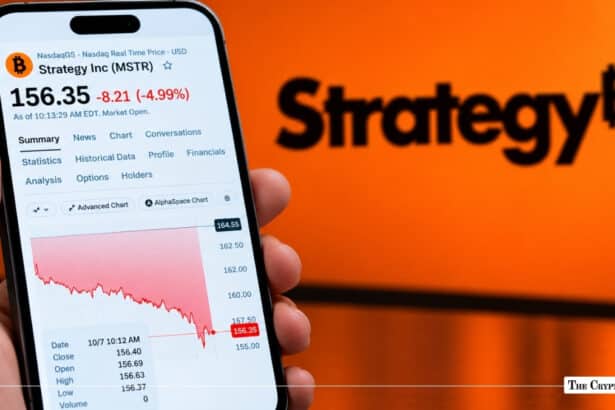
MSTR Shares Fall 5% as Bitcoin Drops Below $84K

MSTR Shares Fall 5% as Bitcoin Drops Below $84K

Line of cryptocurrency logo coins aligned in front of a declining red market graph.

Crypto Stocks MSTR, ABTC, BMNR, CRCL Fall as Bitcoin, Ethereum Slide

The Crypto Times Logo PNG

News

All News
Market News
Bitcoin News
Ethereum News
Altcoin News
Regulations & Policies
DeFi News
Blockchain News
Industry News

Sections

Exclusive
Opinions
Learn
Insights
Videos
Glossary

India Premium Indices

Stablecoins
USDT
USDC

Play

Daily Crypto Puzzles
Tickerdle
Crypto Connections
Crypto Crossword

Company

About Us
Our Authors
Masthead
Editorial Policy
AI Policy
Advertorial Policy
Contact Us
Career

Follow Us

X-twitter Linkedin Telegram Youtube Instagram
© 2026 The Crypto Times | Protocols And Tokens Pvt Ltd.
DMCA.com Protection Status
  • Terms and Conditions
  • Disclaimer
  • Privacy Policy
  • Cookie policy
Do Not Sell or Share My Personal Information