Key Highlights
- Cyber Capital’s Justin Bons argues that XRPL’s Unique Node List (UNL) makes the network “permissioned” and grants Ripple “absolute power” over the chain.
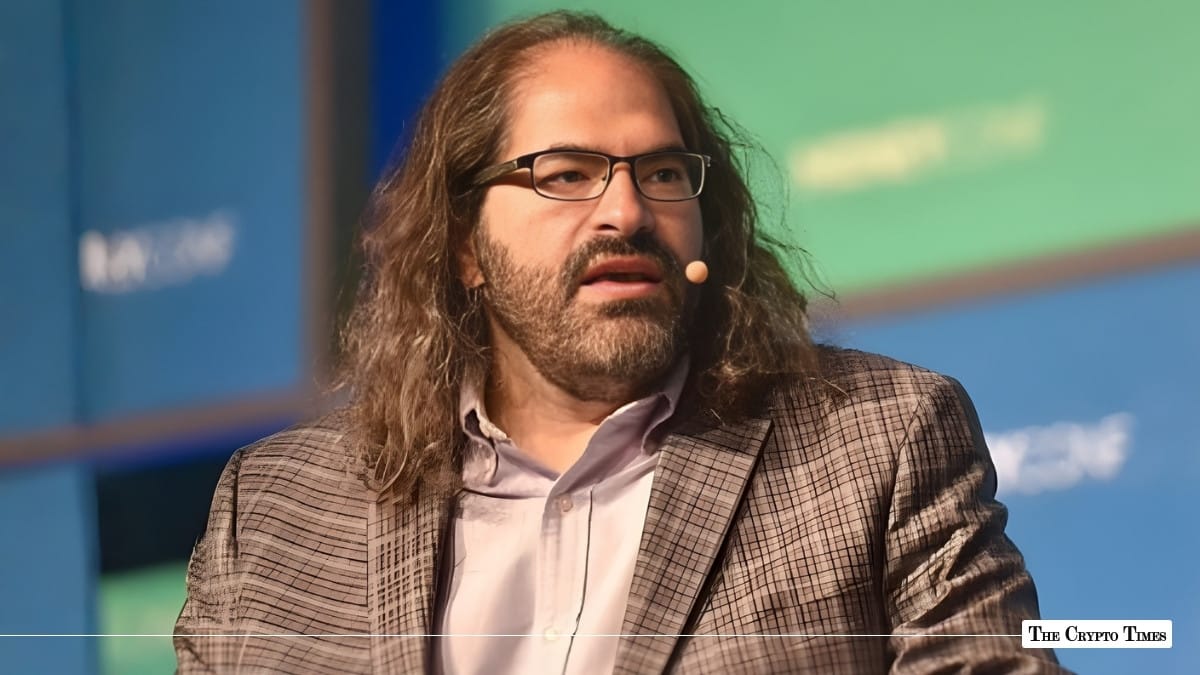
- Ripple CTO David Schwartz asserts that the system was architected so that Ripple cannot control it.
- Schwartz clarified that nodes operate independently; if a validator behaves dishonestly, honest nodes simply ignore them.
A heated digital exchange has reignited one of the oldest and most contentious debates in the cryptocurrency industry: Is the XRP Ledger (XRPL) truly decentralized? The latest clash, featuring Ripple Chief Technology Officer David Schwartz and Justin Bons, Founder and CIO of Cyber Capital, has started a philosophical battle over the “centralized blockchains.”
The debate erupted on Wednesday, February 25, 2026, after Bons published a scathing critique of several major blockchains, including XRP, Stellar, and Algorand. Bons argued that these networks rely on “permissioned” validator structures that threaten the core ethos of crypto, which is decentralization.
The core of the conflict
The dispute centers on the Unique Node List (UNL), a fundamental part of the XRPL consensus protocol. According to Justin Bons, because Ripple (and the XRPL Foundation) publishes a recommended list of validators that most participants follow, the network is effectively centralized.
“Any divergence from this centrally published list would cause a fork,” Bons argued on X. He claimed this gives Ripple “absolute power and control” over the chain, categorizing XRPL as “Proof of Authority” (PoA) rather than a truly permissionless system like Proof of Work (Bitcoin) or Proof of Stake (Ethereum).
Schwartz explained that the UNL system is not a gatekeeping mechanism but a coordination tool designed to prevent Sybil attacks—where a malicious actor creates thousands of fake nodes to overwhelm the network.
Crucially, Schwartz revealed that the decentralization of the XRPL was an intentional regulatory strategy. “We absolutely and clearly decided that we DID NOT WANT control,” Schwartz stated.
He explained that if Ripple had the power to freeze accounts or reverse transactions, a U.S. court could legally compel them to do so. By removing that power from the software’s architecture, Ripple protected the network’s integrity from government interference.
12 years of uptime and the Bitcoin comparison
Schwartz pointed out that the ledger has operated for 12 years without a single failure or successful double-spend.
To bolster his point, Schwartz turned the tables on purist networks. He highlighted that Bitcoin and Ethereum have documented histories of coordinated rollbacks and censorship.
In contrast, the XRPL requires a supermajority of 80% agreement over two weeks to implement changes. If Ripple were to attempt a malicious update, nodes would simply ignore the Ripple-run validators (which now account for less than 2% of the total network) and continue on a different path.
A binary choice?
The debate leaves the crypto community at a crossroads. For purists like Bons, decentralization is binary: it is either permissionless or it is not. For pragmatists like Schwartz, decentralization is a spectrum defined by the inability of any one party to unilaterally change the rules.
As XRPL continues to integrate with global banking systems and central bank digital currencies (CBDCs), the resolution of this debate will determine whether institutional adoption can truly coexist with the decentralized ideals of the blockchain revolution.
Also Read: Ripple CEO Sees 80% Chance CLARITY Act Passes in April, XRP Traders Turn Frenzy