Key Highlights
- Treasury Secretary Scott Bessent says seized Bitcoin will be added to a U.S. digital asset reserve.
- On-chain data suggests U.S. holdings total about 328,000 BTC, worth over $30 billion.
- Policy reinforces a no-buy, no-sell stance as Bitcoin holds firm near key support levels.
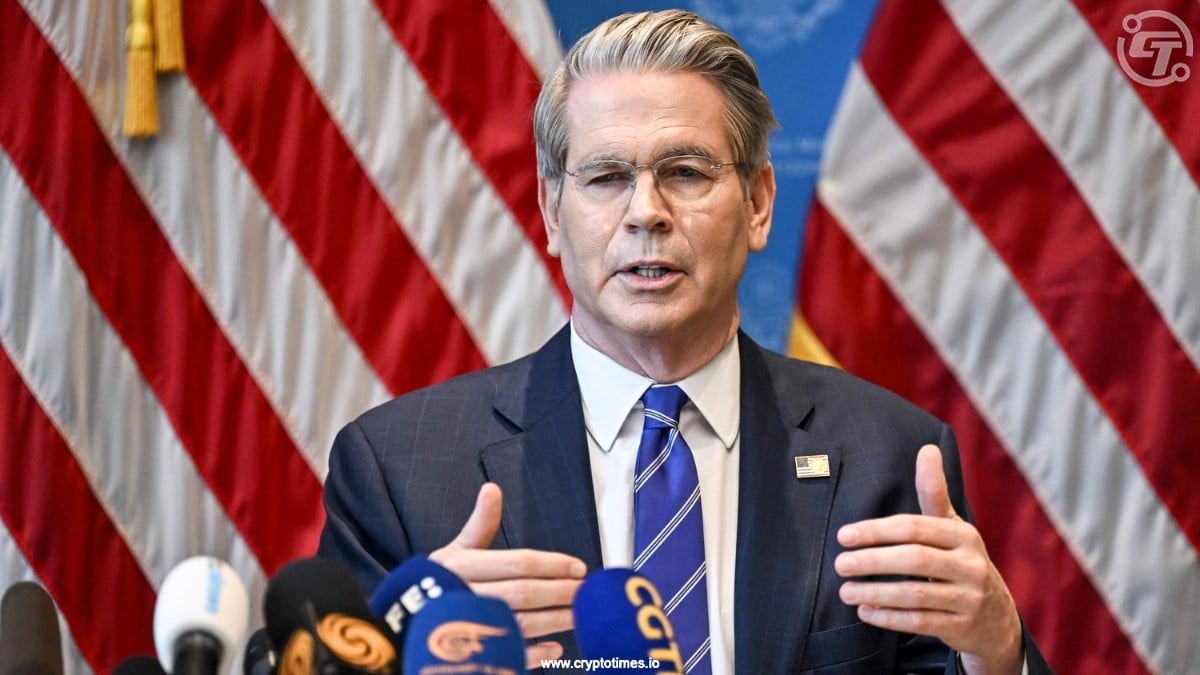
The U.S. Government is looking to add seized Bitcoin to its national digital asset reserve rather than selling it, Treasury Secretary Scott Bessent said today during remarks at the World Economic Forum in Davos. The statement clarifies Washington’s approach to digital assets, building a reserve exclusively from confiscated crypto without making market purchases.
Speaking on the sidelines of the event, Bessent said Bitcoin seized in enforcement actions, including assets linked to the Tornado Cash case, will be retained as part of a long-term reserve strategy.
A reserve built from seizures, not purchases
According to recent on-chain analysis from Arkham Intelligence, U.S. government-controlled wallets hold roughly 328,000 BTC as of mid-January 2026. At current prices, that stash is valued at more than $30 billion, making the U.S. one of the largest known Bitcoin holders in the world.
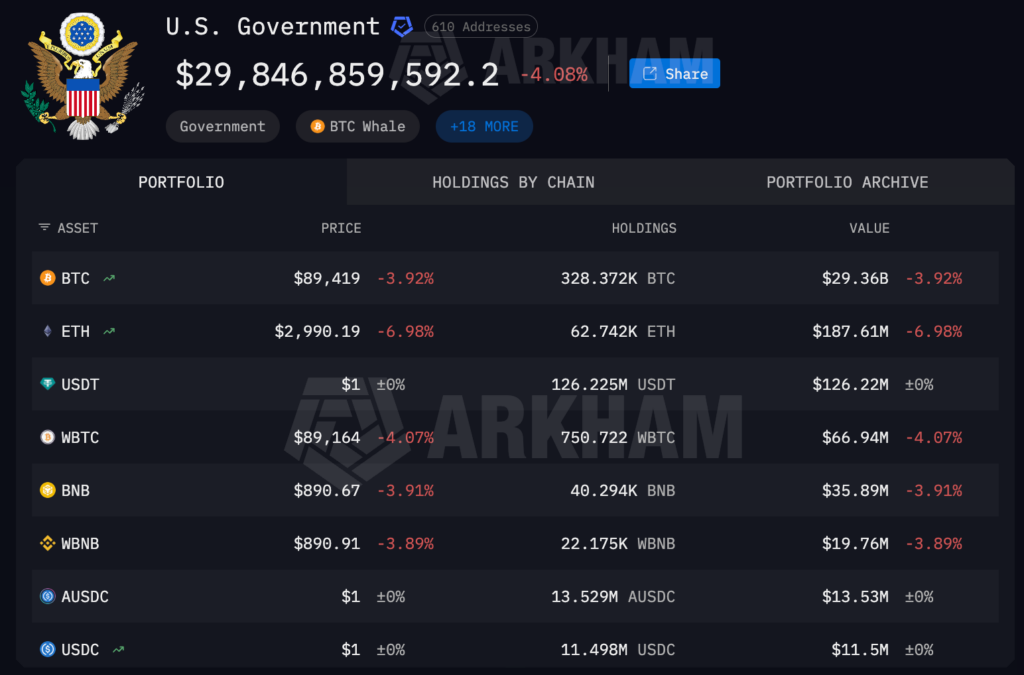
While official figures are not fully disclosed, the holdings largely reflect Bitcoin seized through criminal investigations and forfeiture proceedings. Bessent emphasized that the policy does not involve buying Bitcoin on the open market, a point that echoes earlier statements from the Treasury last year.
In 2025, based on a Chainalysis report, crypto-related scams and fraud are estimated to have reached a record $17 billion in losses. Impersonation schemes and AI-powered tactics made it easier for criminals to scale operations and evade detection.
From selling pressure to long-term storage
The shift marks a change in how markets read the U.S. government Bitcoin holdings. In earlier cycles, movements from government wallets often spooked traders with fears of forced selling. By choosing to hold seized coins instead, the Treasury removes a familiar source of supply pressure.
Bessent previously framed the reserve as a “digital Fort Knox” in August last year, treating Bitcoin as a long-term asset rather than a quick flip. The approach gained legal backing in 2025, clearing the way for seized crypto to be kept instead of auctioned off.
Market backdrop: Sentiment turns constructive
The timing also lines up with a gradual shift in Bitcoin sentiment. A recent “golden cross” in the Fear & Greed Index pointed to improving short-term confidence after a cautious stretch, while on-chain data showed whale selling and stabilizing positions.
Bitcoin was hovering around $91,000 earlier, holding a key support level even as U.S.–Europe trade tensions kept broader markets on edge. Analysts noted that the absence of government selling pressure could help stabilize price action during periods of volatility.
Later in the day, BTC fell to about $89,482, down nearly 4%, while trading volume jumped to $46.8 billion, showing active repositioning despite the sell-off, according to CoinMarketCap.
Bitcoin by custody, not conviction
For investors, the message is that seized Bitcoin is no longer a temporary inventory waiting to be sold. By locking those assets into a reserve, the U.S. is effectively treating Bitcoin as a strategic financial asset, not by endorsement, but by custody.
As governments around the world debate how to handle digital assets, Washington’s approach signals a pragmatic middle ground: regulate, seize when necessary, and hold, without chasing price or trying to suppress it.
Also read: Pump.fun $3M Hackathon Empowers Creators via Token Funding