Key Highlights
- The plan includes research, drafting regulations, and a pilot program with seized Bitcoin.
- Dr. Ju-chun Ko said Bitcoin would not replace existing reserves but could help diversify Taiwan’s assets.
- Taiwan currently holds $577 billion in reserves, mostly in U.S. Treasury bonds and gold, and the move could help manage financial risks.
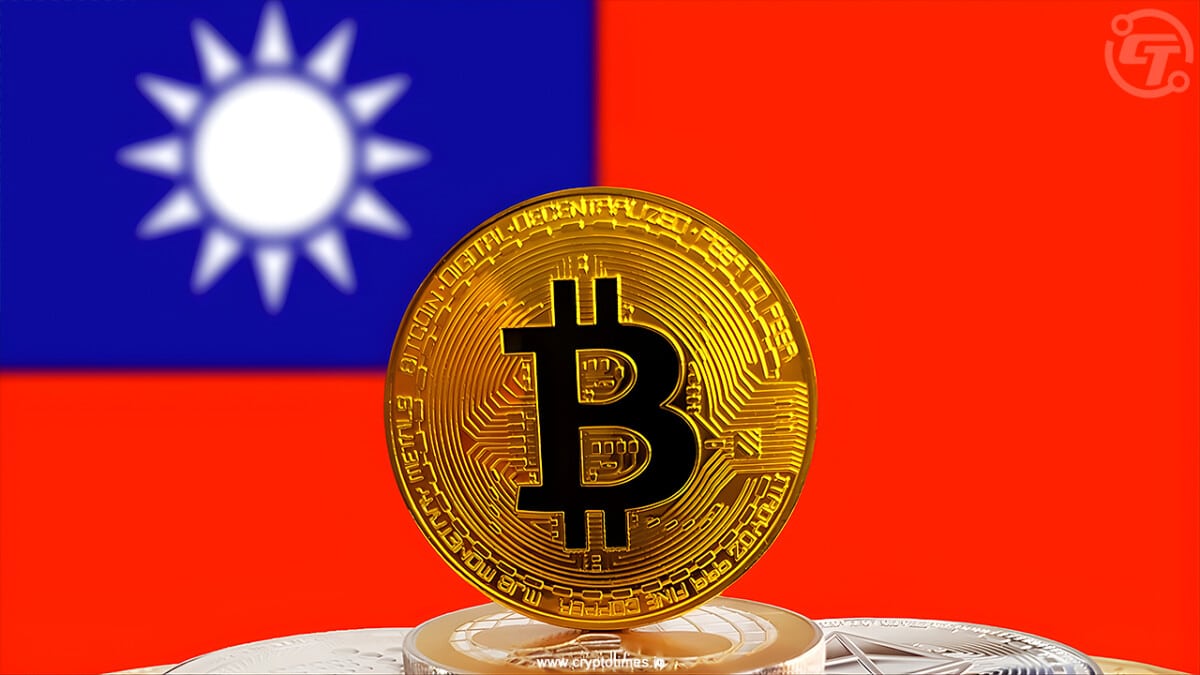
Taiwan’s government is considering including Bitcoin in its financial reserves. The Premier’s Office and Central Bank have reportedly agreed to study whether Bitcoin could serve as part of the country’s strategic reserves.
If implemented, Taiwan could turn into one of the first Asian countries to hold Bitcoin at the national level.
The legislation, championed by legislator Dr. Ju-chun Ko, would take place in three stages. First, the government is supposed to conduct research as a way to assess Bitcoin’s potential as a reserve asset. Second, to facilitate inclusion, regulations will be drafted within six months.
Third, there is a plan to run a pilot program using seized Bitcoin currently in the possession of authorities, awaiting auction. Dr. Ko has reiterated that Bitcoin would not replace existing reserves but could act as an accompanying tool for diversification of Taiwan’s assets.
Current receive strategy
Taiwan currently maintains approximately $577 billion in foreign reserves, 92% of which are allocated into U.S. Treasury bonds, and holds 423 metric tonnes of gold. According to Dr. Ko, the New Taiwan Dollar has been particularly volatile at times, moving as much as 5% in one day.
Amidst such inflation pressures and heavy reliance on the U.S. dollar for assets, a small Bitcoin allocation could be a measure for mitigation while acting as another tool in managing the reserves.
The Central Bank plans to conduct detailed studies and a pilot before any policy changes. For now, the plan is exploratory, but Taiwan could eventually join that small group of nations experimenting with Bitcoin as a sovereign reserve.
The idea is supported by Samson Mow, Chief Executive Officer of Bitcoin firm JAN3, adding that this is in line with what has been happening across borders.
A growing global trend
Several countries have explored or hold Bitcoin in national reserves. In 2021, El Salvador became the very first country to adopt Bitcoin as legal tender. It has more than 6,000 BTC, worth hundreds of millions of dollars, and it has tracked its reserve publicly with a dashboard. Other countries have explored or hold Bitcoin in some capacity, including the US, China, UK, and Bhutan.
Further, Indonesia is also considering Bitcoin for its national reserves, while the government discussed the use of Bitcoin mining as a contributor to long-term financial stability with officials like Vice President Gibran Rakabuming Raka.
Not all central banks share the same optimism. For example, the Bank of Korea, South Korea’s central bank, has ruled out including Bitcoin in its reserves due to high volatility and liquidity risks.
Christine Lagarde, President of the European Central Bank, offered her view that the Czech National Bank will not add Bitcoin to its vaults, pointing out that any asset held by a central bank should be “liquid, secure and safe.”
Taiwan mulls over the idea of including Bitcoin in its national reserves, which, for the most part, remains exploratory. While some countries have already integrated or tested Bitcoin in their financial strategies, others are cautious over volatility and liquidity concerns.
Also Read: MARA CEO Says Miners Must Own Power to Survive the Next Halving